LinnDrum
LinnDrum
Avg. used price: ~£3,987(based on recent Reverb sales)

GearBook helps you research music gear prices. Compare sold prices across Reverb and eBay, see market trends, and find the best deals.
Try a price search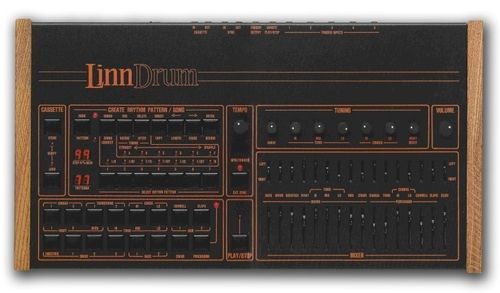
The LinnDrum (LM-2) was the first commercially successful drum machine to use real sampled acoustic drum recordings — and the instrument that made that sound affordable enough for the record industry to adopt wholesale. Released by Linn Electronics in 1982 at $2,995, it followed the earlier LM-1 ($4,995, roughly 525 units sold) and brought the same core idea — sampled drums, individual outputs, swing timing — to a far wider audience across approximately 5,000 units.
Roger Linn and the Origin
Roger Linn was a guitarist and songwriter who needed realistic drum parts for his demos. In the late 1970s he borrowed $20,000 from his father to fund the LM-1's development, paying his PCB designer with his 12-year-old Porsche. Leon Russell — who used an early prototype on his 1979 album Life and Love — contributed two features that became industry standards: handclap samples and the swing timing function that gives programmed patterns a human feel.
The Sound and the Engineering
The LinnDrum stores its 15 sounds in socketed EPROM chips — a deliberate design choice allowing studios to swap sounds in and out. The chips use 8-bit mu-law encoding rather than linear PCM, a technically sophisticated approach that delivers the dynamic range equivalent of 12–13 bits from 8-bit storage by expanding quieter signals more than louder ones. Sample rate is 35 kHz.
The 15 individual outputs — one per sound, plus a stereo mix — allowed engineers to route every drum to a separate console channel for individual processing. At a time when drum machines were single outputs into a single track, this was transformative.
There was no MIDI from the factory. Third-party retrofit kits, most notably from Forat, became available and are now standard on most working units.
Records Built on the LinnDrum
Kate Bush's "Running Up That Hill" (1985) was built around a LinnDrum pattern that Bush conceived and had her engineer Del Palmer programme in. A-ha's "Take On Me" (1985) used a LinnDrum programmed by guitarist Pål Waaktaar — producer Alan Tarney said he had never seen anyone programme a Linn as well. The Thriller album (1982) used a hybrid setup: an LM-2 body with LM-1 sound chips for the snare and congas, and a TR-808 chip for the clap.
Prince's primary machine was the LM-1 rather than the LinnDrum — his engineer Susan Rogers noted he tried the LinnDrum when it launched and preferred the LM-1. Other documented users include Sting, Peter Gabriel, Phil Collins, Duran Duran, Trevor Horn, and Madonna.
Why It Was Discontinued
Linn Electronics closed in February 1986. The Linn 9000 — the intended successor — suffered serious reliability problems that drained company resources. MIDI had become standard across competing machines while the LinnDrum had none. Forat Music purchased the company's assets after closure and continued servicing instruments and supplying MIDI retrofit kits.
Who Is This For?
The LinnDrum is a collector's instrument and a working tool for producers who want the authentic 1980s sound rather than a sample. Used prices range from £1,600 to £4,000 depending on condition and whether a MIDI retrofit is fitted. The Behringer LM Drum (2024) is a lower-cost clone — though Roger Linn has stated publicly that he was not consulted and would have preferred Behringer to ask his permission before copying the design.
Roger Linn's Legacy
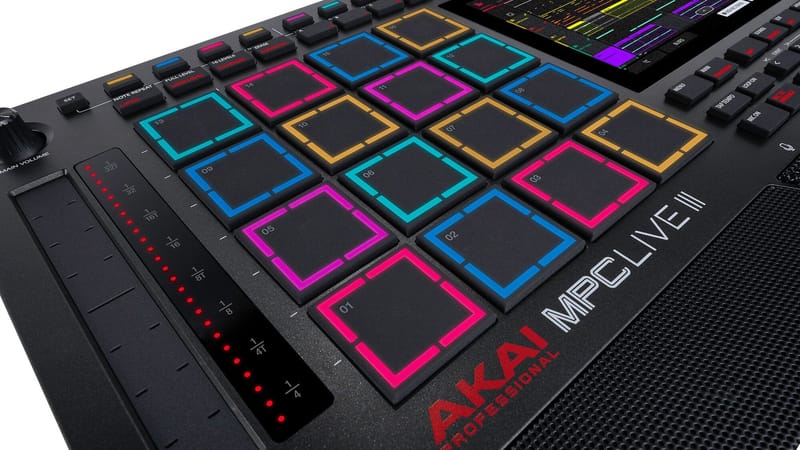
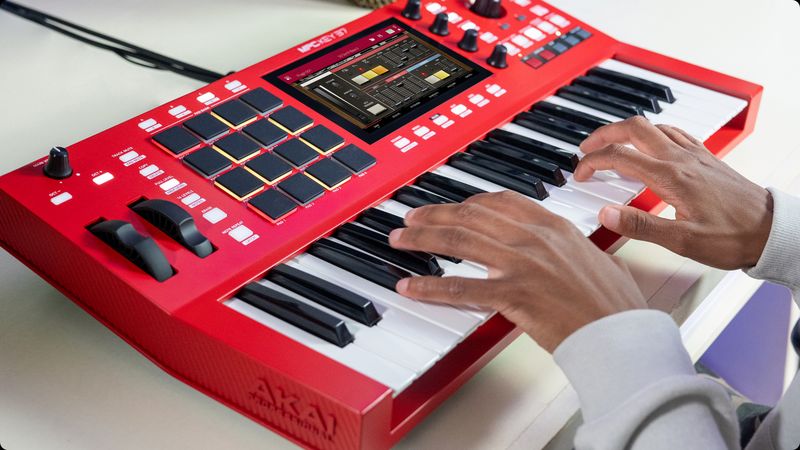
After Linn Electronics closed, Roger Linn joined Akai and designed the MPC60 (1988) — the instrument that introduced velocity-sensitive pads and a workflow that defined beat production for the next three decades. Every Akai MPC since traces its lineage directly to Linn's architecture. The SP-1200 and MPC60 effectively divided hip-hop production between them through the late 1980s and 1990s.
In 2012, Linn collaborated with Dave Smith — founder of Sequential Circuits and creator of the Prophet-5 — on the Tempest, an analog drum machine released through Dave Smith Instruments. It combined Smith's analog synthesis expertise with Linn's sequencer and performance pad design, and remains one of the more unusual instruments either designer put their name to. Today, Roger Linn Design produces the LinnStrument — a grid-based MIDI controller where each pad responds independently to pressure, left/right slide, and up/down movement, giving per-note expressive control that a standard keyboard cannot achieve. It was one of the instruments that helped establish MPE (MIDI Polyphonic Expression) as a standard, and remains his primary commercial focus.
Videos
Frequently Asked Questions
Specifications
| Released | 1982 (discontinued 1986) |
| Sounds | 15 (bass drum, snare with 3 dynamic levels, open/closed hi-hat, ride, crash, 3 toms, congas, cabasa, tambourine, cowbell, handclap, rimshot) |
| Sample rate | 35 kHz |
| Bit depth | 8-bit mu-law encoding (~12–13 bit effective dynamic range) |
| Simultaneous voices | 12 |
| Outputs | 15 individual (one per sound) + stereo mix |
| Trigger inputs | 5 assignable live trigger inputs |
| MIDI | None factory-fitted; Forat retrofit kits widely available |
| Storage | Cassette tape interface; socketed EPROM sound chips (swappable) |
| Patterns | 56 user + 42 preset; 49 song locations |
| Swing | Yes — contributed by Leon Russell during LM-1 development |
| Units produced | Approximately 5,000 |
| Launch price | $2,995 USD (1982) |
Resources
Looking to Buy Used?
Browse current listings on Reverb and eBay to find deals.
Related Gear
Specs and prices are for reference only and may be outdated or contain errors. See full disclaimer. Affiliate links may earn commission.