JBL 305P MkII
JBL 305P MkII
Avg. used price: ~£163(based on recent Reverb sales)·What are these selling for? →

GearBook helps you research music gear prices. Compare sold prices across Reverb and eBay, see market trends, and find the best deals.
Try a price search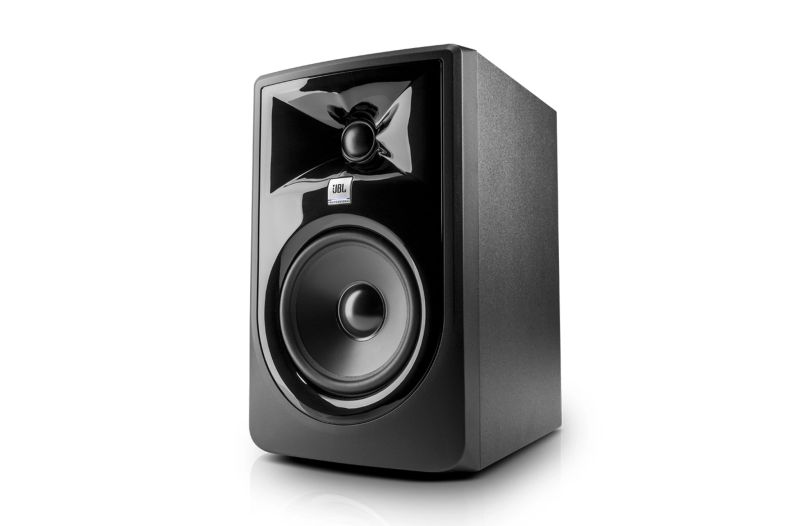
The JBL 305P MkII is the standard recommendation for anyone buying their first proper studio monitors — and for good reason. It brings genuine JBL engineering to an accessible price point, including two patented technologies that originated in the company's flagship M2 Master Reference Monitor: the Image Control Waveguide and the Slip Stream port. The result is a 5" near-field that punches well above its bracket for imaging accuracy and low-end control.
The Image Control Waveguide is the standout feature. It manages the transition between the woofer and tweeter, ensuring phase coherence and a wide, consistent sweet spot. Where many monitors at this price start to fall apart off-axis, the 305P MkII holds its imaging together across a broader listening area — particularly useful in a home studio where you can't always be perfectly centred. Coverage is 120° horizontal by 90° vertical.
The 1" soft dome tweeter uses woven-composite construction with fine-tuned ferrofluid damping for fast transient response. Hi-hats, cymbals, and hard-panned elements are rendered with the kind of clarity that tells you exactly what's happening in the stereo field. The Slip Stream port extends the low end without the port noise that can affect cheaper designs — the 305P MkII reaches 49Hz at -3dB, solid for a 5" driver.
Power comes from dual custom Class D amplifiers, 41W each — one per driver, custom-tuned by JBL for each transducer rather than off-the-shelf designs. Room adjustment is handled by Boundary EQ (three positions reducing low-end shelf at 50Hz for desktop or near-wall placement) and HF Trim (-2dB, 0dB, +2dB) for balancing the tweeter to your room or preference. Connectivity covers balanced XLR and TRS inputs with a +4dBu/-10dBV sensitivity switch.
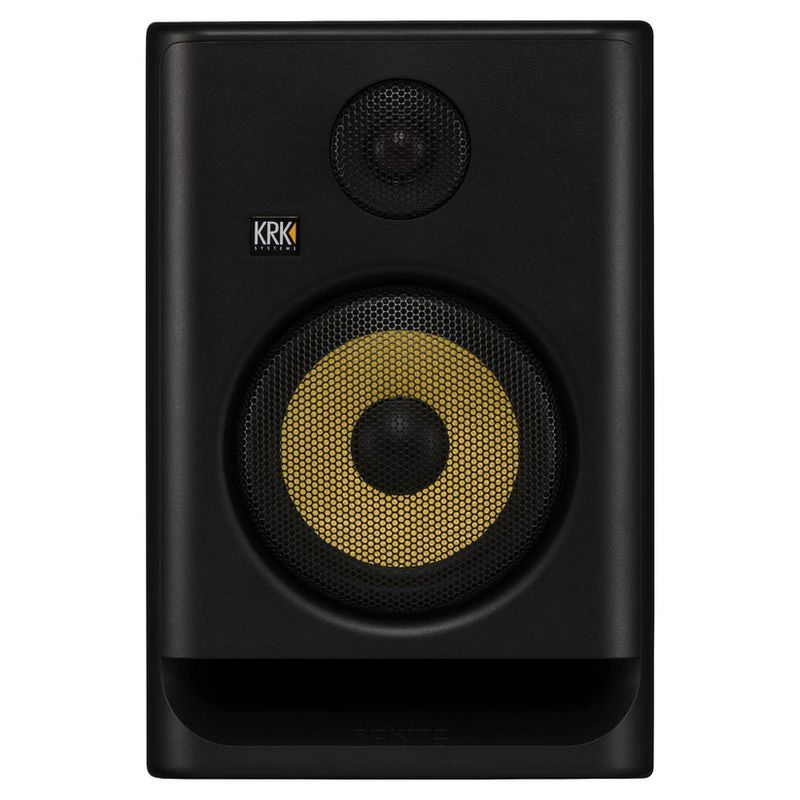
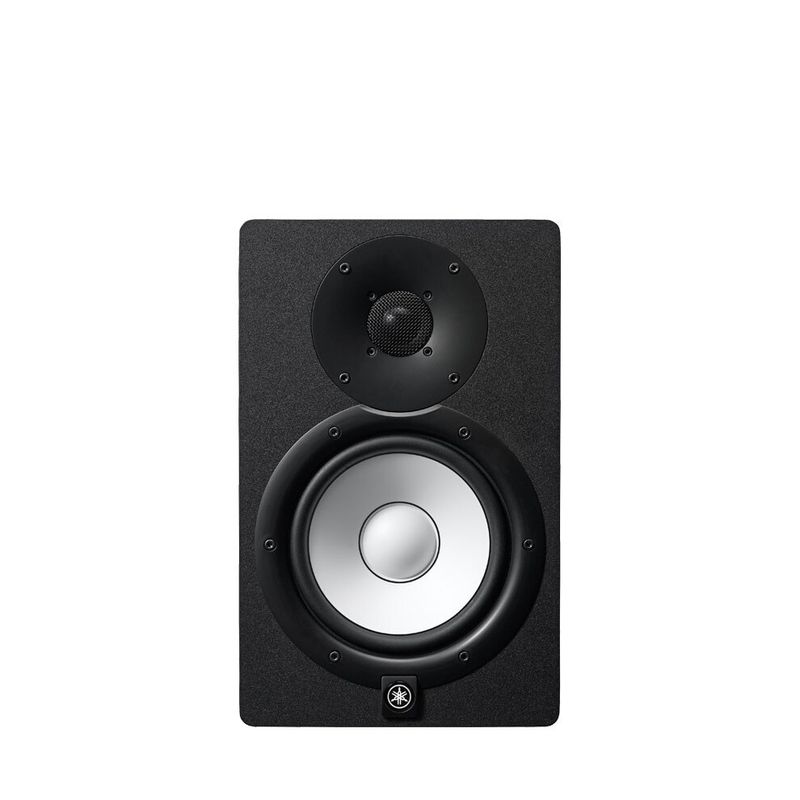
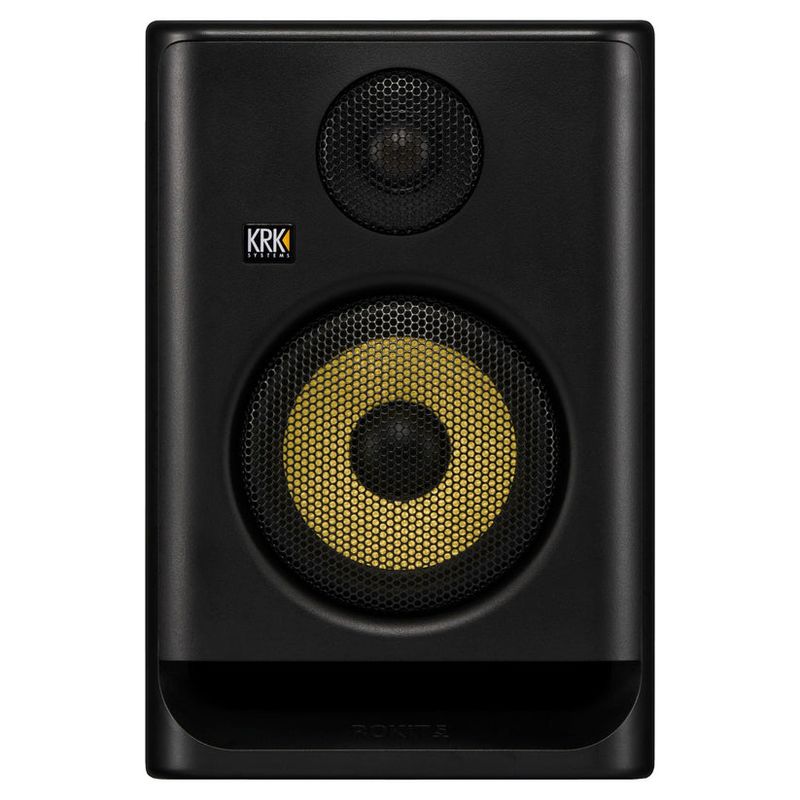
In direct comparisons, the 305P MkII beats the KRK Rokit 5 on mix accuracy and imaging definition. Against the Yamaha HS5 it's a closer contest — the HS5 is leaner and more ruthlessly revealing, the JBL more forgiving with slightly better perceived low-end depth. For untreated rooms, the JBL's fuller bottom end is often the more practical choice. It's not entirely flat — there's a mild presence lift above 2kHz that can make mixes sound brighter than they are, worth accounting for on your first few sessions.
Who Is This For?
The 305P MkII is the benchmark recommendation for home studio producers, bedroom engineers, and anyone moving from consumer speakers to proper near-fields. It suits a wide range of genres and works particularly well for tracking, mixing, and general production where accurate stereo imaging and reliable mid-range matters. The Boundary EQ and HF Trim make it adaptable to imperfect spaces. If you're mixing primarily bass-heavy electronic music, the KRK Rokit range's low-end character may suit you better — but for general-purpose accuracy at this price, the JBL is hard to beat.
Videos
Frequently Asked Questions
Specifications
| Woofer | 5" (126mm) long-throw cone |
| Tweeter | 1" (25mm) soft dome, woven composite |
| Amplifier | 82W total (41W + 41W), Class D bi-amplified |
| Frequency Response | 49Hz – 20kHz (±3dB) |
| Frequency Range | 43Hz – 24kHz (-10dB) |
| Crossover | 1,725Hz, 4th order Linkwitz-Riley |
| Max SPL | 108dB peak |
| Waveguide | JBL Image Control Waveguide (patented) |
| Port | JBL Slip Stream front-firing (patented) |
| Boundary EQ | LF shelf at 50Hz: 0, -1.5, -3dB |
| HF Trim | -2dB, 0dB, +2dB |
| Inputs | Balanced XLR + TRS, +4dBu/-10dBV switchable |
| Coverage | 120° × 90° |
| Dimensions | 298 × 185 × 231mm |
| Weight | 4.73kg (single monitor) |
Resources
Buy New
Buy from authorized retailers. Affiliate links may earn commission.
Looking to Buy Used?
Browse current listings on Reverb and eBay to find deals.
Related Gear
Specs and prices are for reference only and may be outdated or contain errors. See full disclaimer. Affiliate links may earn commission.