Moog One
Moog One Used Price Guide
Avg. used price: ~£5,243(based on recent Reverb sales)·What are these selling for? →

GearBook helps you research music gear prices. Compare sold prices across Reverb and eBay, see market trends, and find the best deals.
Try a price search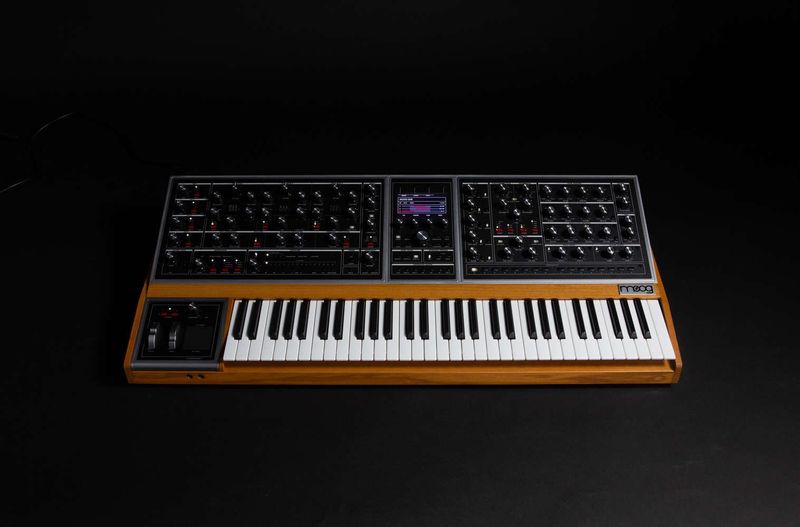
Moog One used prices at a glance
The Moog One typically sells for between £5,216 and £5,317 on the used market, with an average price of £5,243 based on recent Reverb sold listings. The Moog One is a premium piece of gear with strong resale value and is frequently traded on the used market. Prices have been stable over the last 30 days.
- Average used prices
- Latest sold listings
- Price trends over time
- Factors that affect resale value
If you're buying or selling a Moog One, this gives you a realistic view of what it actually sells for today.
Low
£5,216
Average
£5,243
High
£5,317
- Average Used Price
- £5,243
- Typical Range
- £5,216 – £5,317
- Last Sold Price
- £5,243
- Trend
- stable
- Most Recent Sale
- 17 days ago
Is the Moog One holding its value?
Used Moog One prices have been stable over the last 30 days, hovering around £5,243. That points to steady demand without dramatic supply changes — the kind of pattern that tends to hold over multiple quarters. Boxed, mint units still sell at the top of the range; rougher examples can sit £30-£60 below the average.
Units in better condition or with original packaging tend to sell at the higher end of the range, while heavily used examples sell for less.
Demand for the Moog One remains strong among synth enthusiasts and producers, which helps support its resale value.
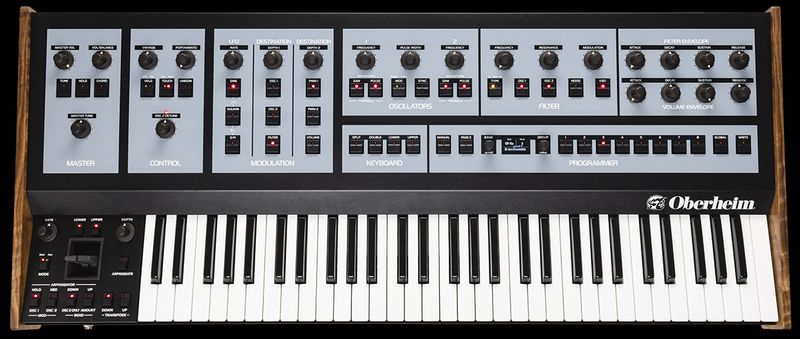
The Moog One is Moog's flagship polyphonic analog synthesizer — a tri-timbral, fully programmable instrument that represents the most ambitious hardware synth the company has ever produced. Available in 8-voice and 16-voice configurations, it was discontinued in 2024 after a relatively short production run, making used examples the only way to acquire one. It is one of the most capable analog synthesizers ever made at any price.
Who Is This For?
The Moog One is for serious synthesists with the budget and space to match. It suits composers and sound designers who want maximum analog polyphony and the ability to run three completely independent synthesizers simultaneously — each with its own oscillators, filters, envelopes, and effects. It is not a beginner instrument, and its complexity rewards deep exploration over months and years. With the 16-voice version originally retailing at $7,999 and now discontinued, it sits firmly in collector and professional territory on the used market.
Architecture: Tri-Timbral Analog
Each of the three independent synthesizer sections (called Synths A, B, and C) draws from the available voice count. You can stack all voices on one timbre for massive unison sounds, split voices across two or three timbres for layered or split patches, or run all three independently. Each synth section has its own signal path, modulation, and effects — functionally three analog synthesizers in one chassis.
Oscillators and Filters
Every voice runs three analog VCOs with dual simultaneous waveforms, variable sawtooth and pulse-width modulation, a ring modulator, and a dual-source noise generator with adjustable spectral character. Two filters per voice — a multimode State Variable filter (LP/HP/BP/band reject) and the classic Moog Ladder filter at 6, 12, 18, or 24 dB/octave — can run in series or parallel, enabling tonal combinations unavailable on most polyphonic synths.
Modulation
Four LFOs and three DAHDSR envelope generators per voice feed a 20-slot modulation matrix with FM pathways throughout the signal chain. The depth here is closer to a modular system than a conventional polysynth — virtually any parameter can modulate any other, and the modulation can itself be modulated.
Effects and Control
Each synth section has its own 18-algorithm digital effects unit covering vocoder, resonator, chorus, delay, phaser, bit reduction, and a suite of Eventide-developed reverbs. A master bus effects section processes the combined output. The panel features over 200 single-function controls alongside a central display for deeper editing. The 61-note Fatar TP-8S keyboard is weighted with velocity and aftertouch.
Videos
Frequently Asked Questions
Specifications
| Polyphony | 8 or 16 voices (tri-timbral — 3 independent synthesizer sections) |
| Oscillators | 3 analog VCOs per voice, dual simultaneous waveforms, ring modulator, noise generator |
| Filters | 2 per voice: State Variable (LP/HP/BP/BR) + Moog Ladder (6/12/18/24 dB), series or parallel |
| Envelopes | 3 DAHDSR per voice |
| LFOs | 4 per voice |
| Modulation | 20-slot modulation matrix with FM pathways |
| Effects | 18-algorithm digital FX per synth section (vocoder, reverb, delay, chorus, phaser, bit reduction) + master bus FX |
| Keys | 61-note Fatar TP-8S weighted, velocity + aftertouch |
| CV/Gate | CV/Gate I/O for modular integration |
| MIDI | MIDI In/Out/Thru (DIN-5), USB |
| Outputs | Per-voice, per-synth, and master stereo outputs |
| Dimensions | 107 × 51 × 18 cm (42" × 20" × 7") |
| Weight | 20.4 kg (45 lb) |
| Status | Discontinued 2024 |
Resources
Looking to Buy Used?
Browse current listings on Reverb and eBay to find deals.
Featured In
Related Gear
More from Moog
Specs and prices are for reference only and may be outdated or contain errors. See full disclaimer. Affiliate links may earn commission.