Universal Audio Apollo Twin X Duo
Universal Audio Apollo Twin X Duo

GearBook helps you research music gear prices. Compare sold prices across Reverb and eBay, see market trends, and find the best deals.
Try a price search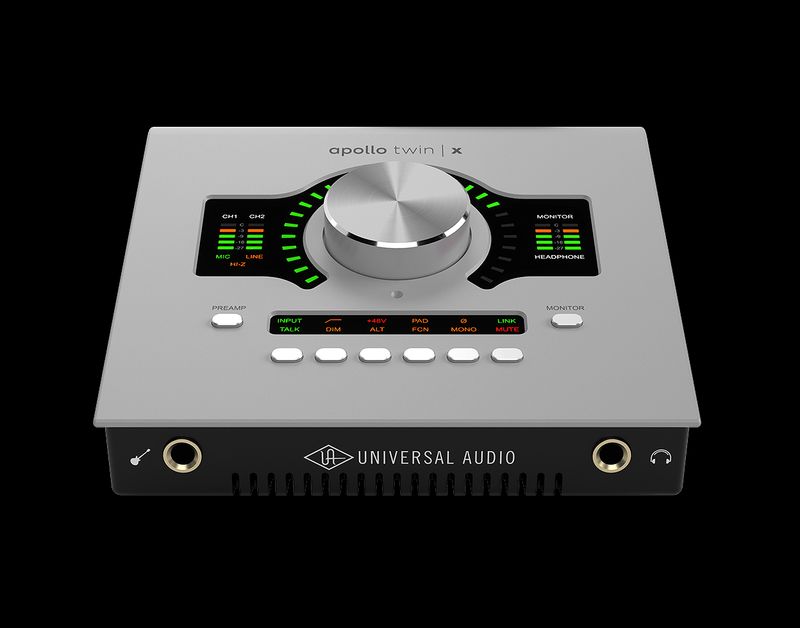
The Universal Audio Apollo Twin X is a Thunderbolt audio interface built around one idea: recording through the same analogue emulations used in professional studios, in real time, without taxing your CPU. It is the interface that brought UAD processing to the desktop, and it remains one of the most capable recording tools available at its price point.
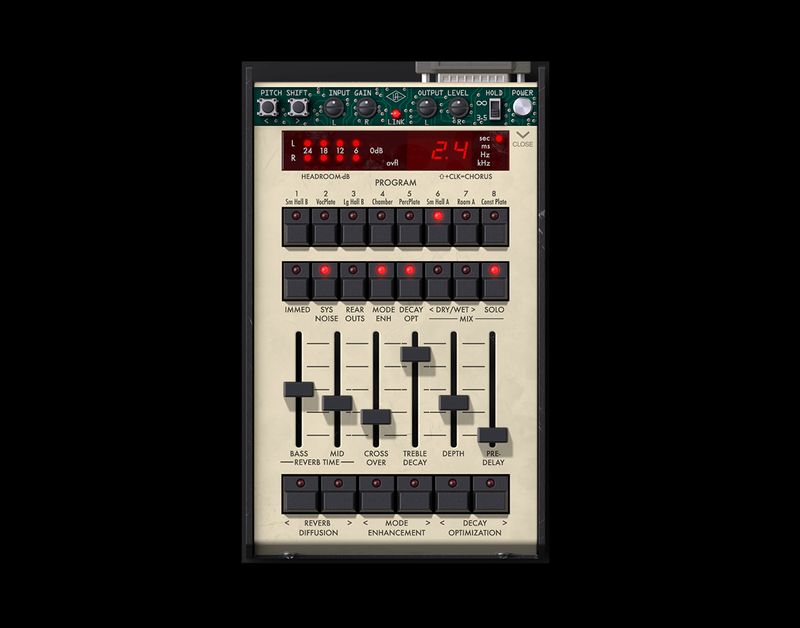
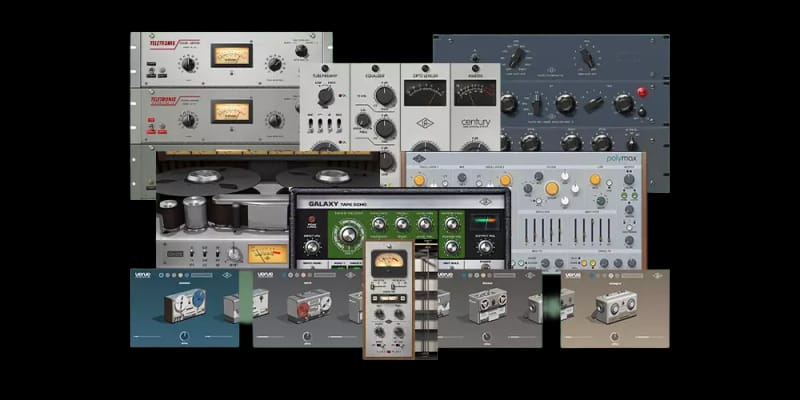
The hardware itself is excellent. Two Unison preamps accept XLR, line, or instrument sources with 127dB dynamic range and switchable pad, polarity, and low-cut per channel. An optical input adds ADAT or SPDIF expansion, allowing up to eight additional inputs via an external preamp or converter. What sets the Apollo apart is what happens to the signal once it is inside: onboard UAD DSP chips run Neve, API, Manley, Fairchild, and Teletronix emulations at the preamp stage in real time — the same plugins used on major recordings, running at near-zero latency before the signal even hits your DAW.
The DUO variant (Duo Core DSP) handles moderate plugin loads comfortably — two or three instances of a Neve 1073 or an LA-2A compressor without breaking a sweat. The QUAD variant doubles the DSP headroom for heavier sessions. Most users find the DUO sufficient for tracking; the QUAD is more relevant if you are mixing through UAD plugins at high session counts.
The connection is Thunderbolt 3, which means a dedicated Thunderbolt port is required — not USB-C. An external power supply is also needed; the Apollo is not bus-powered. These are real-world limitations worth knowing before buying, particularly for laptop users without Thunderbolt.
On the used market the DUO is the most commonly traded variant. Gen 1 and Heritage Edition units are widely available at lower prices; the Gen 2 introduced improved converters and is the version worth seeking out. UAD plugin licences do not transfer with the hardware, so any plugins the previous owner owned stay with their UA account.
Who Is This For?
- Producers and engineers who want to track through analogue-emulation plugins in real time
- Home studios that have outgrown clean-but-plain interfaces and want character at the preamp stage
- Anyone already invested in the UAD plugin ecosystem
- Recording engineers who need the lowest possible monitoring latency regardless of session size
Videos
Frequently Asked Questions
Specifications
| Inputs | 2× Unison XLR/combo (mic/line/instrument), optical ADAT/SPDIF |
| Outputs | 2× 1/4" TRS line, 2× 1/4" monitor, 1× stereo headphone |
| Preamps | 2× Unison, 48V phantom power, switchable pad and polarity per channel |
| DSP | UAD-2 DUO Core (Duo) or QUAD Core (Quad) — runs UAD plugins in real time |
| Dynamic Range | 127dB |
| Resolution | 24-bit / 192kHz |
| Connectivity | Thunderbolt 3 (requires dedicated TB3 port, not USB-C) |
| Power | External DC power supply required (not bus-powered) |
| MIDI | None |
| Expansion | Optical ADAT/SPDIF for up to 8 additional inputs |
Resources
Looking to Buy Used?
Browse current listings on Reverb and eBay to find deals.
Related Gear
More from Universal Audio
Specs and prices are for reference only and may be outdated or contain errors. See full disclaimer. Affiliate links may earn commission.