Yamaha CS-80
Yamaha CS-80 Used Price Guide
Avg. used price: ~£32,044(based on recent Reverb sales)·What are these selling for? →

GearBook helps you research music gear prices. Compare sold prices across Reverb and eBay, see market trends, and find the best deals.
Try a price search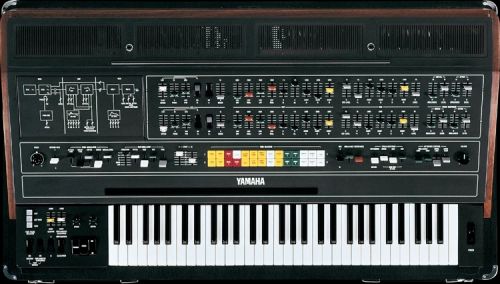
Yamaha CS-80 used prices at a glance
The Yamaha CS-80 typically sells for between £31,890 and £32,254 on the used market, with an average price of £32,044 based on recent Reverb sold listings. The Yamaha CS-80 is a premium piece of gear with strong resale value and is frequently traded on the used market.
- Average used prices
- Latest sold listings
- Price trends over time
- Factors that affect resale value
If you're buying or selling a Yamaha CS-80, this gives you a realistic view of what it actually sells for today.
Low
£31,890
Average
£32,044
High
£32,254
- Average Used Price
- £32,044
- Typical Range
- £31,890 – £32,254
- Last Sold Price
- £32,044
- Trend
- stable
What does a used Yamaha CS-80 typically sell for?
Used Yamaha CS-80 units have traded around £32,044 (£31,890-£32,254) based on recent Reverb sold listings. Trading on this model is thinner, so day-to-day variation in the recorded average tends to reflect Reverb's rolling sample more than active market movement. The chart shows where the price has settled rather than where it's heading right now.
Units in better condition or with original packaging tend to sell at the higher end of the range, while heavily used examples sell for less.
The Yamaha CS-80 retains its value among synth enthusiasts and producers, with collectors and long-term owners driving most trades.
The Yamaha CS-80 is one of the most legendary synthesizers ever made. Released in 1977 and produced until around 1980, it was Yamaha's flagship polyphonic analog synth with only around 800 units manufactured. Its expressive keyboard, massive dual-layer architecture, and unmistakable sound have made it the holy grail of polyphonic synthesizers.
Architecture and Sound
The CS-80 features 8-voice true polyphony with two completely independent synthesizer layers (Channel I and Channel II), each with its own front panel controls. Every voice has two analog oscillators offering sawtooth, square, and sine waveforms, plus a mixable white noise source. The sine wave is uniquely routed after the filter section—since filtering a pure sine would have no effect. Signals feed into per-voice high-pass and low-pass 12dB filters with dedicated envelope generators. The dual-layer design means you can create two different patches and layer or split them, giving the CS-80 an exceptionally thick, rich sound. A built-in ring modulator, chorus (using an analog BBD circuit), and tremolo round out the tonal palette. A built-in auto-tune function keeps the analog oscillators in check.
Expression and Playability
What truly sets the CS-80 apart is its polyphonic aftertouch keyboard. Unlike most aftertouch implementations which apply pressure globally, the CS-80's 61-key weighted keyboard senses pressure independently per key, allowing you to add vibrato, brightness, or volume changes to individual notes within a chord. Combined with velocity sensitivity (rare in 1977) and a ribbon controller for pitch bends and glissandos, the CS-80 offers a level of musical expression that many modern synths still struggle to match.
The CS-80 provides 22 factory presets across its two channels plus 4 user memory slots that use subminiature sliders hidden under a panel cover—a primitive but functional form of patch recall.
Legacy and Practical Reality
Vangelis made the CS-80 iconic through Blade Runner, Chariots of Fire, and countless other recordings—he reportedly owned up to four units. Toto and many others relied on it throughout the late 1970s and 1980s. Today, working units are extremely rare and command prices of £30,000 to £60,000 or more. At 100 kg (220 lbs), the CS-80 requires serious commitment to move and maintain. Vintage units need regular servicing due to aging components, and finding qualified technicians is increasingly difficult.
Who Is This For?
- Collectors and synth historians wanting the definitive vintage polyphonic synthesizer
- Studios building a premium vintage instrument collection and equipped for maintenance
- Producers chasing the exact Vangelis/Blade Runner sound at the source
- Anyone else should seriously consider the Arturia CS-80 V software emulation or other modern alternatives
The Yamaha CS-80 is not a practical purchase for most musicians. It is heavy, fragile, expensive, and demands ongoing maintenance. But nothing else sounds or plays quite like it. If you have the resources and dedication, owning a CS-80 is owning a piece of synthesizer history.
Videos
Frequently Asked Questions
Specifications
| Year | 1977–1980 |
| Polyphony | 8 voices, dual-layer (2 channels) |
| Oscillators | 2 per voice (saw, square, sine) + white noise |
| Filters | Per-voice HPF and LPF, 12dB/oct |
| Keyboard | 61 keys, velocity + polyphonic aftertouch |
| Presets | 22 factory + 4 user memory |
| Effects | Ring modulator, chorus, tremolo |
| Controllers | Ribbon controller, vibrato/pitch/brightness/volume |
| Original Price | $6,900 (1977) |
| Weight | 100 kg (220 lbs) |
| Units Produced | ~800 |
Resources
Looking to Buy Used?
Browse current listings on Reverb and eBay to find deals.
Featured In
Related Gear
More from Yamaha
Specs and prices are for reference only and may be outdated or contain errors. See full disclaimer. Affiliate links may earn commission.