Roland JV-1080
Roland JV-1080 Used Price Guide
Avg. used price: ~£312(based on recent Reverb sales)·What are these selling for? →

GearBook helps you research music gear prices. Compare sold prices across Reverb and eBay, see market trends, and find the best deals.
Try a price search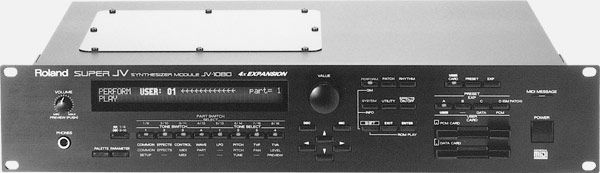
Roland JV-1080 used prices at a glance
The Roland JV-1080 typically sells for between £266 and £312 on the used market, with an average price of £312 based on recent Reverb sold listings. The Roland JV-1080 is frequently traded on the used market. Prices have been rising over the last 30 days.
- Average used prices
- Latest sold listings
- Price trends over time
- Factors that affect resale value
If you're buying or selling a Roland JV-1080, this gives you a realistic view of what it actually sells for today.
Low
£266
Average
£312
High
£312
- Average Used Price
- £312
- Typical Range
- £266 – £312
- Last Sold Price
- £312
- Trend
- rising
- Most Recent Sale
- 4 days ago
Why are Roland JV-1080 prices rising?
Used Roland JV-1080 prices have been increasing over the last 30 days. That usually reflects growing demand or thinning supply on Reverb — buyers chasing a known good unit while listings get rarer. If you've been weighing a purchase, expect to pay slightly above the £312 average; if you're selling, you have room to push on condition and included accessories.
Units in better condition or with original packaging tend to sell at the higher end of the range, while heavily used examples sell for less.
Demand for the Roland JV-1080 remains strong among synth enthusiasts and producers, which helps support its resale value.
The Roland JV-1080 is a 2U rackmount synthesizer module released in 1994 that became one of the most widely used sound modules in professional music production. With 64-voice polyphony, 16-part multitimbrality, and an expandable architecture that supports up to four SR-JV80 expansion boards, the JV-1080 delivered a staggering range of sounds in a compact, reliable package. It was a studio workhorse throughout the 1990s and early 2000s, appearing on countless records across pop, R&B, hip-hop, film scoring, and electronic music.
Sound Engine and Waveforms
The JV-1080 uses a 32-bit RISC processor running at 66MHz to drive its sample-based synthesis engine. Out of the box, it ships with 8MB of PCM waveform data containing 448 samples at 16-bit resolution, covering acoustic instruments, basses, pads, leads, organs, choirs, and drum kits. Each patch can stack up to four tones with independent filter, envelope, and effects settings, allowing for complex layered sounds. The factory preset library includes hundreds of patches and rhythm kits that were considered best-in-class when released and still hold up remarkably well.
Expansion System
The defining feature of the JV-1080 is its four expansion board slots. Each SR-JV80 card adds 8MB of additional PCM waveforms, potentially expanding the unit to 42MB total. Roland released over a dozen expansion boards covering orchestral sounds, world instruments, vintage synths, dance music, piano, and more. This modular approach meant you could customize the JV-1080 for your specific needs. Sought-after cards like SR-JV80-04 (Vintage Synth) and SR-JV80-02 (Orchestral) can be expensive on the used market.
Effects and Connectivity
The effects section includes reverb, chorus, and a multi-effects processor with algorithms for distortion, auto-wah, rotary speaker, delay, pitch shifting, and more. Three stereo output pairs let you route individual parts to separate mixer channels for detailed mixing. MIDI In, Out, and Thru ports provide full integration with hardware sequencers and DAWs. A large backlit LCD makes patch browsing and editing manageable, though deep editing is more comfortable with a computer-based editor.
Who Is This For?
- Producers looking for classic 90s and early 2000s rompler sounds at an affordable price
- Film and media composers who need a broad, reliable palette of orchestral and cinematic tones
- Hip-hop and R&B producers chasing the specific pad and bass sounds that defined an era
- Hardware enthusiasts who enjoy building a custom sound library through expansion boards
The JV-1080 remains excellent value on the used market, typically selling for $150 to $300 without expansion boards. Roland also offers a software JV-1080 through Roland Cloud that includes all expansion board content. Whether you go hardware or software, the JV-1080 sound library is a cornerstone of modern music production that still earns its place in any studio.
Videos
Frequently Asked Questions
Specifications
| Year Released | 1994 |
| Form Factor | 2U Rackmount |
| Polyphony | 64 voices |
| Multitimbral | 16 parts |
| Processor | 32-bit RISC at 66MHz |
| Waveform Memory | 8MB (expandable to 42MB) |
| Expansion Slots | 4x SR-JV80 card slots |
| Outputs | 3 stereo pairs (6 jacks) |
| Dimensions | 482 x 281 x 88 mm |
| Weight | 5 kg (11 lbs) |
Resources
Looking to Buy Used?
Browse current listings on Reverb and eBay to find deals.
Related Gear
More from Roland
Specs and prices are for reference only and may be outdated or contain errors. See full disclaimer. Affiliate links may earn commission.