Roland Juno-106
Roland Juno-106 Used Price Guide
Avg. used price: ~£1,360(based on recent Reverb sales)·What are these selling for? →

GearBook helps you research music gear prices. Compare sold prices across Reverb and eBay, see market trends, and find the best deals.
Try a price search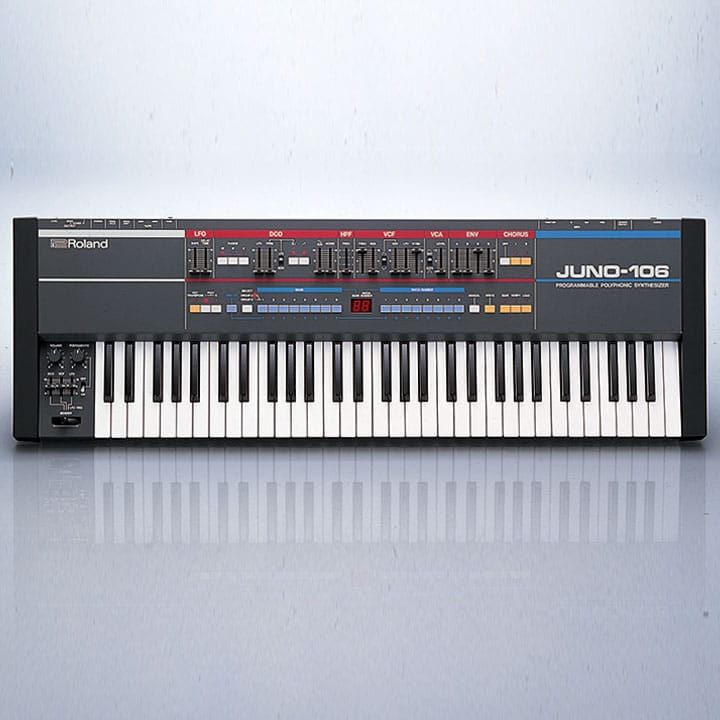
Roland Juno-106 used prices at a glance
The Roland Juno-106 typically sells for between £1,296 and £1,404 on the used market, with an average price of £1,360 based on recent Reverb sold listings. The Roland Juno-106 is a premium piece of gear with strong resale value and is frequently traded on the used market. Prices have been stable over the last 30 days.
- Average used prices
- Latest sold listings
- Price trends over time
- Factors that affect resale value
If you're buying or selling a Roland Juno-106, this gives you a realistic view of what it actually sells for today.
Low
£1,296
Average
£1,360
High
£1,404
- Average Used Price
- £1,360
- Typical Range
- £1,296 – £1,404
- Last Sold Price
- £1,360
- Trend
- stable
- Most Recent Sale
- 6 days ago
Is the Roland Juno-106 holding its value?
Used Roland Juno-106 prices have been stable over the last 30 days, hovering around £1,360. That points to steady demand without dramatic supply changes — the kind of pattern that tends to hold over multiple quarters. Boxed, mint units still sell at the top of the range; rougher examples can sit £30-£60 below the average.
Units in better condition or with original packaging tend to sell at the higher end of the range, while heavily used examples sell for less.
Demand for the Roland Juno-106 remains strong among synth enthusiasts and producers, which helps support its resale value.
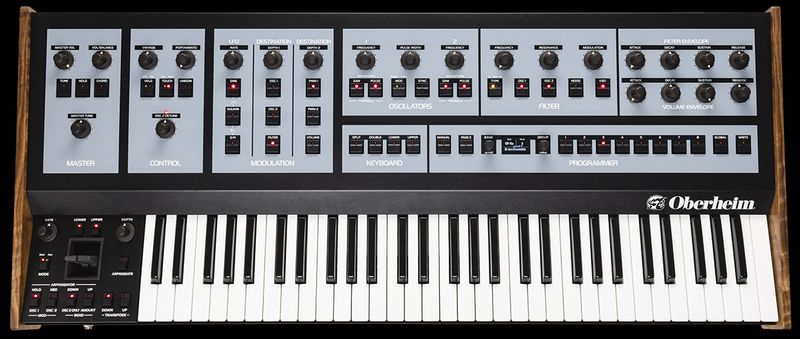
The Roland Juno-106 is one of the best-selling and most widely used analog synthesizers of all time. Released in 1984, it was Roland's first MIDI-equipped polysynth and offered six voices of warm, immediate analog sound with a simple interface that anyone could learn in minutes. Its lush chorus effect, fat basses, and silky pads have appeared on countless records across pop, house, techno, synthwave, and virtually every other genre. Decades later, the Juno-106 remains one of the most sought-after vintage synths on the used market.
Sound and Architecture
Each of the Juno-106's six voices features a single DCO (Digitally Controlled Oscillator) — not a traditional VCO, which is why the Juno-106 stays in tune where older analogs drift. The DCO offers pulse wave (with variable pulse width), sawtooth, a square sub-oscillator one octave below, and white noise, all of which can be mixed together. The signal feeds into a 24dB/octave low-pass filter based on the Roland IR3109 chip, with resonance that self-oscillates, plus a non-resonant high-pass filter. A single ADSR envelope controls the filter, and a separate gate/ADSR controls the amplifier.
The Chorus
The Juno-106's BBD analog chorus is arguably its most famous feature. Two settings (Chorus I and II) can be used individually or stacked together for a rich, shimmering stereo spread that transforms even simple patches into something lush and wide. The chorus is the secret weapon behind the "Juno sound" — it is so iconic that it has been sampled, modelled, and cloned more than almost any other single effect in synthesis history.
Interface and MIDI
The front panel is a masterclass in simplicity — one slider or switch per function, no menus, no pages. What you see is what you get, making the Juno-106 one of the fastest synths to program from scratch. It stores 128 patches in RAM with full MIDI implementation including SysEx dumps, making it easy to back up and share patches. The Juno-106 was one of the first synths to offer proper MIDI, which contributed to its widespread adoption in studios.
Common Issues
The Juno-106's Achilles' heel is the 80017A voice chip. These custom Roland ICs handle the envelope generator and VCA for each voice, and they are prone to failure — the epoxy coating degrades over time and causes voices to drop out, distort, or go silent. Replacement chips (both NOS and modern clones from Analogue Renaissance and others) are available, and a full re-chip is a common service. When buying used, always test all six voices individually.
Who Is This For?
- Producers and songwriters who want instant, beautiful analog pads and basses with zero learning curve
- Live performers who need a reliable, hands-on polysynth with MIDI
- Vintage synth collectors after one of the defining instruments of the 1980s
- House and techno artists looking for the classic Juno chord stabs and bass sounds
The Juno-106 is a relatively affordable entry into high-quality vintage analog synthesis, though prices have climbed steadily. Always check the voice chips before buying — a unit with all six voices working cleanly is worth significantly more than one with failing chips. If the vintage price is too steep, the Roland JU-06A Boutique module and Roland Cloud Juno-106 plugin faithfully recreate the sound.
Videos
Frequently Asked Questions
Specifications
| Year Released | 1984 |
| Polyphony | 6 voices |
| Oscillator | 1 DCO per voice (saw, pulse with PWM, sub-osc, noise) |
| Filter | 24dB/oct LPF (self-oscillating) + non-resonant HPF |
| Chorus | Analog BBD chorus (2 settings, stackable) |
| LFO | Triangle, 0.1-30Hz (pitch, filter, PWM) |
| Patch Memory | 128 patches (RAM) |
| MIDI | Full implementation with SysEx |
| Keyboard | 61 keys |
| Dimensions | 992 x 320 x 120mm |
| Weight | 10 kg (22 lbs) |
Resources
Looking to Buy Used?
Browse current listings on Reverb and eBay to find deals.
Featured In
Related Gear
More from Roland
Specs and prices are for reference only and may be outdated or contain errors. See full disclaimer. Affiliate links may earn commission.