Detroit techno didn't emerge from well-funded studios or major labels. It was built in bedrooms and basements by three friends armed with cheap, unwanted machines — instruments that had failed commercially and ended up in pawnshops at a fraction of their original price. What Juan Atkins, Derrick May, and Kevin Saunderson did with that gear would shape electronic music for the next four decades.
The Belleville Three
They met at Belleville High School, a suburban school about 20 miles outside Detroit. All three were among the very few Black students there, and they bonded over a shared obsession: the late-night radio show of DJ Charles "The Electrifying Mojo" Johnson, whose five-hour overnight broadcasts on Detroit's WGPR had no format restrictions. On any given night, Mojo might play Kraftwerk back-to-back with Parliament-Funkadelic, then Giorgio Moroder, then Prince, then Tangerine Dream.
Juan Atkins, the oldest of the three, was already deep into synthesis by the time May and Saunderson arrived. His grandmother had bought him a Korg MS-10 for Christmas around 1979, and he later said that the work he did on that synth was "the most productive period of my entire career." He had a tape, he recalled, "of nothing but Kraftwerk, Telex, Devo, Giorgio Moroder and Gary Numan, and I'd ride around in my car playing it."
Derrick May came to Belleville at 13, his mother moving the family from Detroit to get him out of the city. As a teenager he started making trips to Chicago, where his mother eventually relocated, and absorbed the emerging house music scene firsthand — Frankie Knuckles, Larry Levan, the Warehouse. He brought that influence back to Belleville and folded it into what was already forming.
Kevin Saunderson arrived from Brooklyn via Inkster, and was the last of the three to go fully into music — he was studying telecommunications and playing football at Eastern Michigan University before committing. But once he did, he moved fast.
The Machines Nobody Wanted
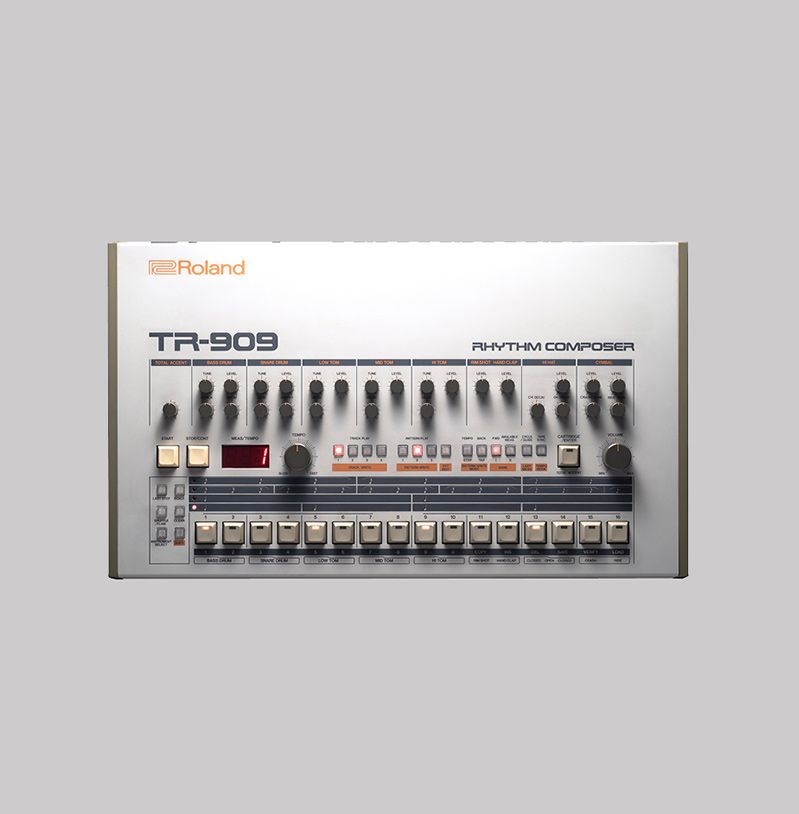
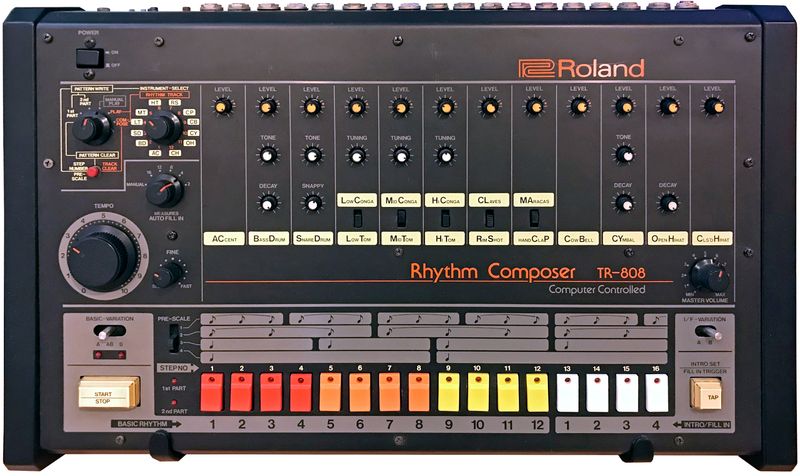
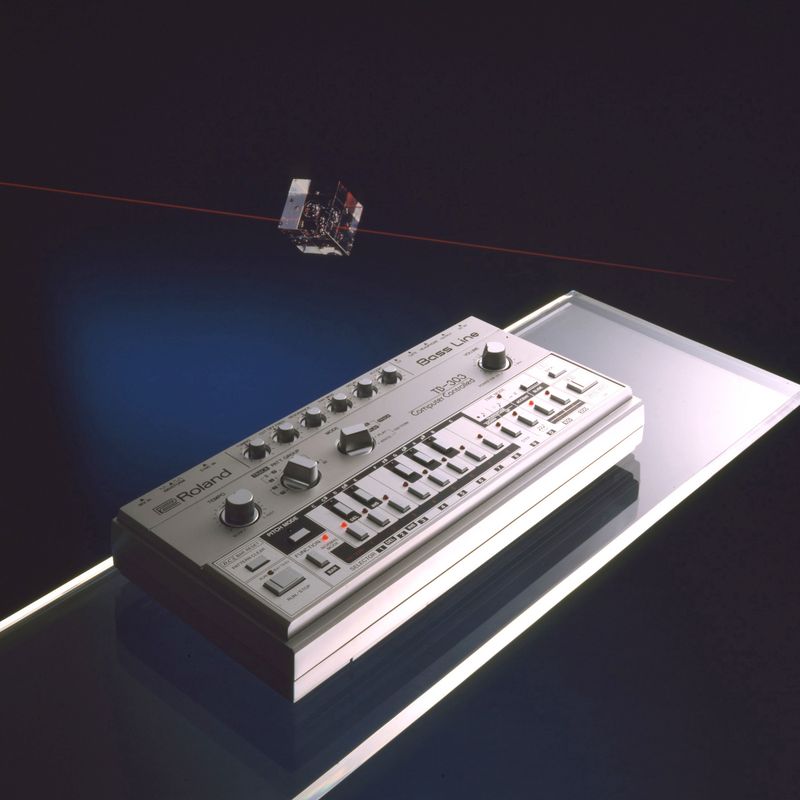
The gear that powered Detroit techno was, paradoxically, gear that nobody else wanted. Roland's TR-808 had been discontinued in 1983 after failing to sell at its $1,100 retail price. The Roland TR-909~£4164 used launched in 1982 and was gone within two years — too electronic, musicians said, nothing like real drums. The TB-303 bass machine had already been written off in bargain bins.
By the mid-1980s, all three were circulating through Detroit and Chicago pawnshops at a fraction of their original prices. Eddie Fowlkes, another early Detroit producer, reportedly picked up his first TR-909 at a pawnshop for $50. Robert Hood, who came slightly later, described his studio as "pawn shop equipment that I got for like $100, $125 dollars."
Atkins bought his first Roland TR-808~£4215 used while still in high school. The machines that had failed to convince jazz clubs and rock studios were about to be repurposed into something their designers had never imagined.
The First Records
In 1985, Atkins released "No UFOs" under the alias Model 500 — widely cited as one of the first true techno records. He'd built his label Metroplex in the basement of his grandmother's apartment. The track was made on a Roland TR-909~£4164 used MIDI-chained to a Sequential DrumTraks, with bass lines from a Sequential Six-Trak, leads from a Sequential Pro-One, and everything recorded to a Tascam 8-track. No samples, no loops from other records — just synthesis, sequencing, and rhythm.
Two years later, Derrick May gave the world "Strings of Life" under the name Rhythim Is Rhythim. The piano chords were played by May's friend Michael James on a Kurzweil digital piano, then sped up, looped, and reworked. The string sounds came from an Ensoniq Mirage sampler — May had recorded live orchestral strings to cassette at a local concert hall and replayed them through the sampler. The drums were a TR-909. Famously, there is no bass line anywhere in its seven-and-a-half minutes. May reportedly spent two days listening to it on repeat after he made it, barely leaving his apartment.
The track was named by Frankie Knuckles, to whom May had given a demo tape. Later — in a moment that became legend — May sold Knuckles his TR-909 when he couldn't make rent. Knuckles reportedly looked at the machine and said: "This is going to take us to the future."
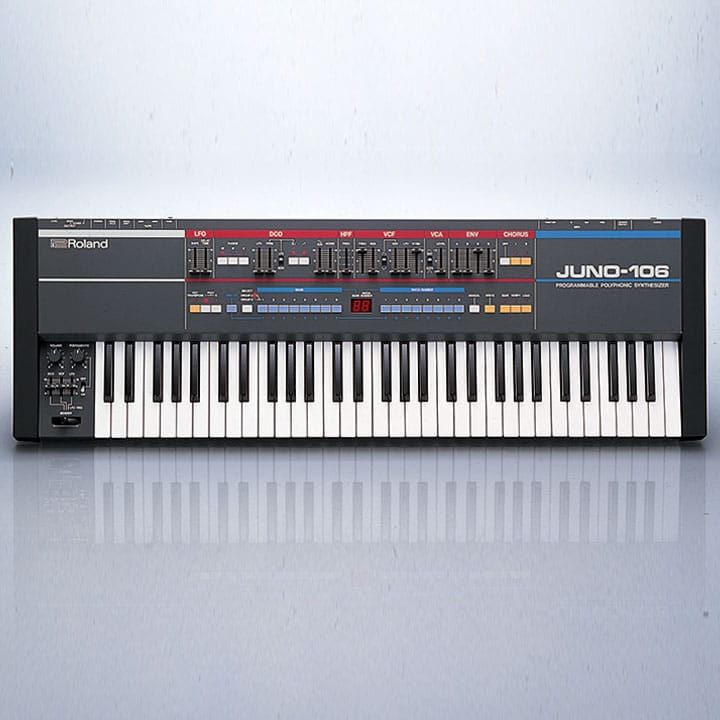
Kevin Saunderson's contribution came in 1988 with two releases that pointed in different directions. Under the name Reese, he created "Just Want Another Chance" — a track that introduced what became known as the Reese bass, one of the most copied sounds in the history of drum & bass and jungle. The patch came from a synthesizer — accounts vary, with a Casio CZ-5000 and a Roland Juno-106 both cited in different tellings — pushed far beyond its default settings through experimentation. Under the name Inner City, he made "Big Fun" with vocalist Paris Grey — a track that would reach the UK mainstream charts and put Detroit on the map for a mainstream audience.
The Sound of Detroit
What distinguished Detroit techno from Chicago house wasn't just the gear — it was the intent. House was warm, soulful, built for dancing and release. Detroit was colder, more futuristic, more indebted to Kraftwerk's machine aesthetic than to disco's human heat. Derrick May described it as being "like George Clinton and Kraftwerk stuck in an elevator."
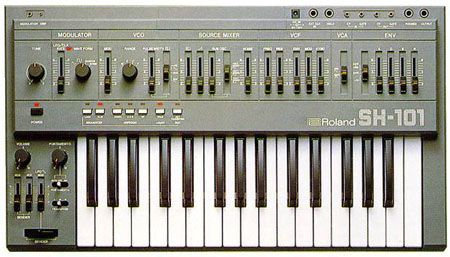
The TR-909's punchy analog kick and crisp hi-hats gave Detroit tracks their drive. The TB-303 and SH-101 provided the melodic and bass elements — not the squelching acid sound of Chicago, but tighter, more controlled. The Roland Roland Juno-106~£1321 used became a staple for atmospheric chords and pads. Atkins used Sequential Circuits machines extensively; May leaned on the Kurzweil and Ensoniq for melodic content; Saunderson pushed the Casio and Juno for bass.
There were no multitrack sessions at major studios. Atkins worked on a Tascam 8-track with seven usable channels, one reserved for MIDI sync. Saunderson recorded "Big Fun" on the same format before expanding to 16-track at Atkins' studio to add vocals. The constraint of the format shaped the music as much as the instruments themselves.
How It Reached the World
In 1987, a UK Northern Soul DJ and journalist named Neil Rushton spotted a phone number on a Transmat release and called it. Derrick May answered. They talked for hours. Later, Rushton visited Detroit with journalists Stuart Cosgrove and John McCready, met Atkins and Saunderson, and sold the concept of a Detroit compilation to Virgin Records.
"Techno! The New Dance Sound of Detroit" was released in May 1988. The title came from an Atkins track called "Techno Music" — a word he'd been using since his Cybotron days to describe the futuristic, machine-driven sound he was making. The compilation didn't recoup commercially on its own, but Inner City's "Big Fun" became a mainstream UK hit that autumn, and "Strings of Life" had already become an anthem of the UK's Second Summer of Love. Detroit's music arrived at precisely the moment the British rave scene needed it.
The deeper connection came later, and from an unexpected direction. When the Berlin Wall fell in November 1989, vast areas of abandoned buildings in East Berlin became improvised spaces for a new kind of party culture. Young people from East and West Berlin were looking for music to soundtrack reunification — and they found it in Detroit. Tresor club opened in March 1991 in the vaults of a former department store, and immediately began booking Atkins, May, Jeff Mills, and Underground Resistance. Dimitri Hegemann, one of Tresor's founders, later said: "Reunification took place on the basement of the dance floor to the sound of Detroit techno."
The Legacy
The Belleville Three opened the Music Institute in Detroit in May 1988 — widely considered the world's first club dedicated to techno. By then, they had already changed electronic music forever. The machines they used, the labels they ran out of basements (Metroplex in 1985, Transmat in 1986, KMS in 1987), and the records they made on Tascam 8-tracks established a template that ran directly into Berlin's golden era, the UK rave explosion, jungle, drum & bass, and virtually every form of electronic club music that followed.
The gear is worth a fortune now. The Roland TR-909~£4164 used that Eddie Fowlkes picked up for $50 in a pawnshop commands prices that would make the original retail figure look modest. The Roland TR-808~£4215 used that Juan Atkins bought in high school now sits alongside vintage Moogs as one of the most coveted instruments in electronic music. The machines that nobody wanted became the machines that changed everything — and they did it because three friends from Belleville didn't know, or didn't care, what they were supposed to sound like.