Arturia MiniFreak
Arturia MiniFreak Used Price Guide
Avg. used price: ~£375(based on recent Reverb sales)·What are these selling for? →

GearBook helps you research music gear prices. Compare sold prices across Reverb and eBay, see market trends, and find the best deals.
Try a price search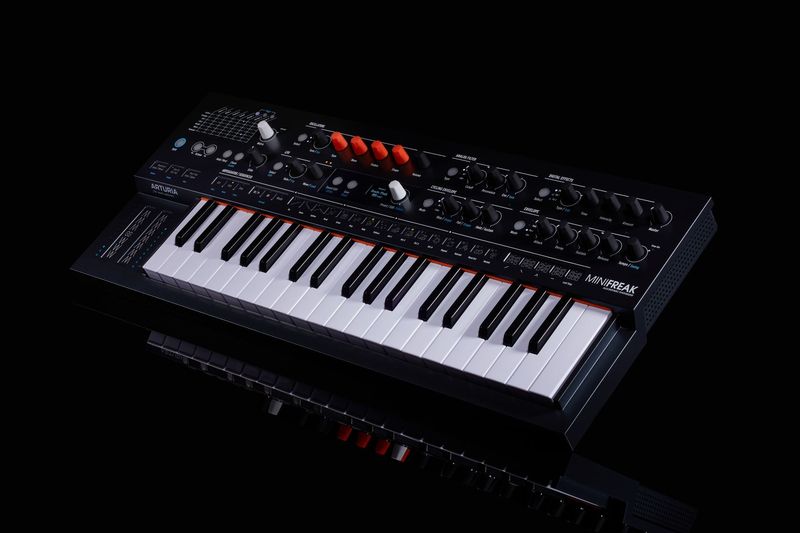
Arturia MiniFreak used prices at a glance
The Arturia MiniFreak typically sells for between £368 and £375 on the used market, with an average price of £375 based on recent Reverb sold listings. The Arturia MiniFreak is frequently traded on the used market. Prices have been stable over the last 30 days.
- Average used prices
- Latest sold listings
- Price trends over time
- Factors that affect resale value
If you're buying or selling a Arturia MiniFreak, this gives you a realistic view of what it actually sells for today.
Low
£368
Average
£375
High
£375
- Average Used Price
- £375
- Typical Range
- £368 – £375
- Last Sold Price
- £375
- Trend
- stable
- Most Recent Sale
- yesterday
Is the Arturia MiniFreak holding its value?
Used Arturia MiniFreak prices have been stable over the last 30 days, hovering around £375. That points to steady demand without dramatic supply changes — the kind of pattern that tends to hold over multiple quarters. Boxed, mint units still sell at the top of the range; rougher examples can sit £30-£60 below the average.
Units in better condition or with original packaging tend to sell at the higher end of the range, while heavily used examples sell for less.
Demand for the Arturia MiniFreak remains strong among synth enthusiasts and producers, which helps support its resale value.
The Arturia MiniFreak is a 6-voice polyphonic hybrid synthesizer combining dual digital oscillators with individual per-voice analog filters. Unlike many synths in this price range that use paraphony — sharing a single filter across all voices — the MiniFreak gives each voice its own independent analog signal path. Combined with 31 oscillator algorithms spanning everything from standard waveforms to FM, granular, physical modelling, and Mutable Instruments Plaits modes, it covers an unusually wide sonic range for the price.
Who Is This For?
The MiniFreak suits producers who want genuine polyphony with analog character without spending thousands. It works well for pads, leads, basses, and experimental textures, and its 3-slot stereo effects chain means you can get a finished sound without additional outboard. Live performers appreciate the two touch strips for real-time expressive control, and the 64-step sequencer handles pattern-based playing independently of a computer. It is a strong choice as a first hardware synth for anyone who wants to explore multiple synthesis approaches in one instrument.
Oscillator Engines
Each voice runs two oscillators in parallel or series, drawing from 31 available algorithms. Standard modes include morphing saw/square waves, superwave stacks, two-operator FM, and Karplus-Strong string synthesis. More unusual options include Speech (a Mutable Instruments Plaits vocal mode), Cloud Grains and Hit Grains granular engines added via firmware, and an Audio In mode that processes external signals through the synthesis chain. The depth of the oscillator section is one of the MiniFreak's most compelling features — it genuinely rewards exploration.
Analog Filter
Each of the six voices has its own analog state-variable filter with lowpass, bandpass, and highpass modes. The filter self-oscillates and responds expressively to envelope and modulation. Having six independent filters rather than one shared filter is what separates the MiniFreak from cheaper paraphonic alternatives — chords breathe and move naturally because each note has its own filter envelope.
Effects and Modulation
Three independent stereo effects slots each offer 13 algorithms including chorus, phaser, flanger, reverb, delay, distortion, and bit crusher. The modulation matrix connects 7 sources to 13 destinations, and two programmable LFOs per voice with a 16-stage shape designer allow complex evolving modulations. Two touch strips provide hands-on macro control in performance.
MiniFreak vs MicroFreak
The MicroFreak remains a capable, more affordable option with a unique capacitive touch keyboard and CV connectivity that the MiniFreak lacks. The MiniFreak gains true polyphony, dual oscillators per voice, six independent analog filters, built-in effects, velocity-sensitive keys, and aftertouch. For most producers the MiniFreak is the better all-round instrument; the MicroFreak suits those who specifically want CV integration or the touch keyboard's polyphonic expression.
Watch the price Short
Price guide for the Arturia MiniFreak
Videos
Frequently Asked Questions
Specifications
| Polyphony | 6 voices (true polyphony, per-voice analog filter) |
| Oscillators | 2 per voice, 31 algorithms (wavetable, FM, granular, Karplus-Strong, speech, and more) |
| Filter | Analog state-variable (LP/BP/HP), self-oscillating, per voice |
| Effects | 3 stereo FX slots, 13 algorithms each |
| Modulation | 7×13 matrix, 2 LFOs per voice, 16-stage LFO shape designer |
| Sequencer | 64 steps (4 pages × 16), real-time and step recording |
| Keys | 37 mini keys, velocity + aftertouch |
| Presets | 384 factory, 256 user slots |
| Outputs | 2× 1/4" TRS stereo, 1× 1/4" headphone |
| MIDI | MIDI In/Out/Thru (DIN-5), USB-B |
| Clock | 1/8" TRS clock in/out, reset out |
| Power | 12V DC, 1A |
| Dimensions | 578 × 231 × 55 mm |
| Weight | 2.94 kg |
Resources
Buy New
Buy from authorized retailers. Affiliate links may earn commission.
Looking to Buy Used?
Browse current listings on Reverb and eBay to find deals.
Featured In
Related Gear
Specs and prices are for reference only and may be outdated or contain errors. See full disclaimer. Affiliate links may earn commission.