Two of the most influential electronic instruments ever made were commercial failures. The Roland TB-303 and TR-909 were designed for one purpose, rejected by musicians, and then repurposed into the rhythmic and melodic foundation of an entirely new genre. This is the story of how acid house changed music.
The Machines Nobody Wanted
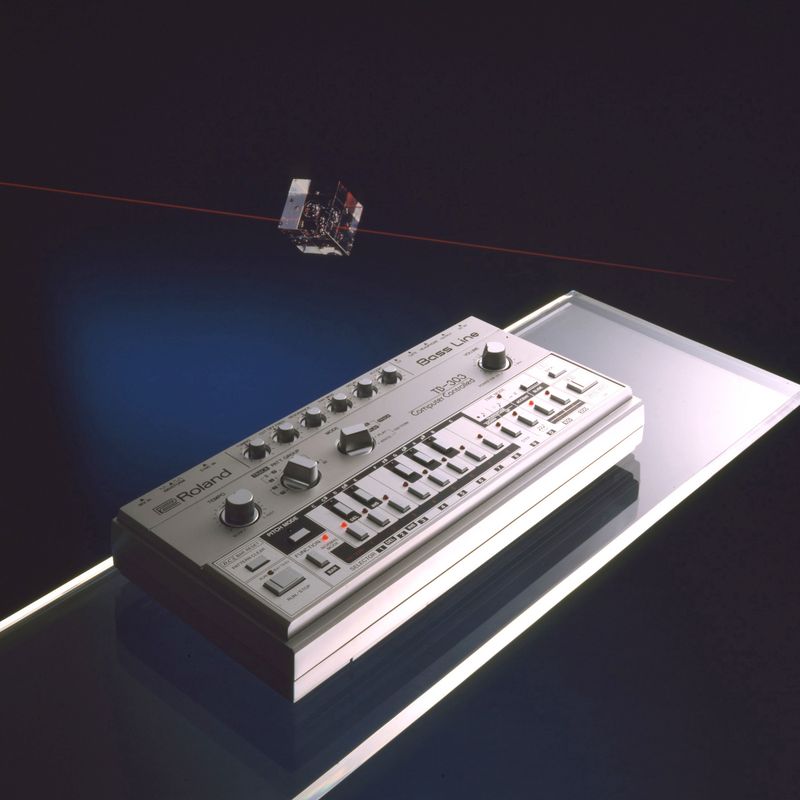
The TB-303 Bass Line (1982)
Roland released the Roland TB-303~£2315 used in 1981 as a bass accompaniment device — a small silver box that could simulate bass patterns while a guitarist or solo musician practised or performed alone. It was designed to be used alongside Roland's TR-606 drum machine. It had a single oscillator, a resonant low-pass filter, and a step sequencer.
It flopped. The bass sounds were unconvincing, and the two-stage sequencer — where you entered pitches separately from timing — was baffling to use. Roland discontinued it after around 18 months, having built approximately 10,000 units. Unsold stock ended up in secondhand shops, sometimes changing hands for as little as $50.
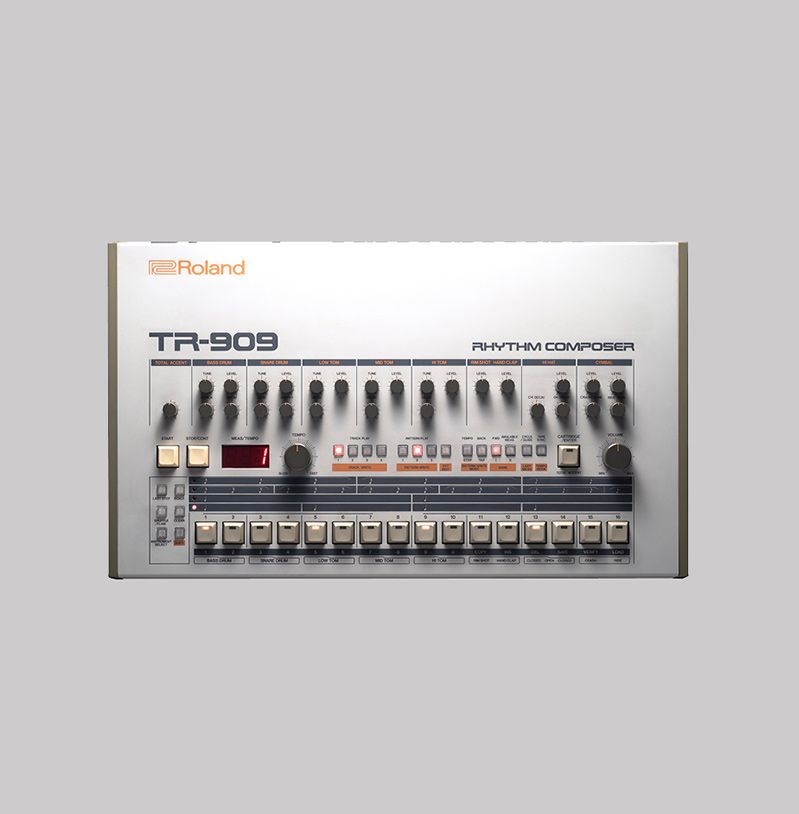
The TR-909 Rhythm Composer (1983)
The Roland TR-909~£4186 used arrived two years later in 1983 as Roland's first MIDI-equipped drum machine. It combined analog synthesis for kick, snare, and toms with 6-bit digital samples for hi-hats and cymbals. Musicians in 1983 wanted realistic drum sounds, and the 909's punchy electronic tones didn't convince. Roland discontinued it after one year, approximately 10,000 units produced.
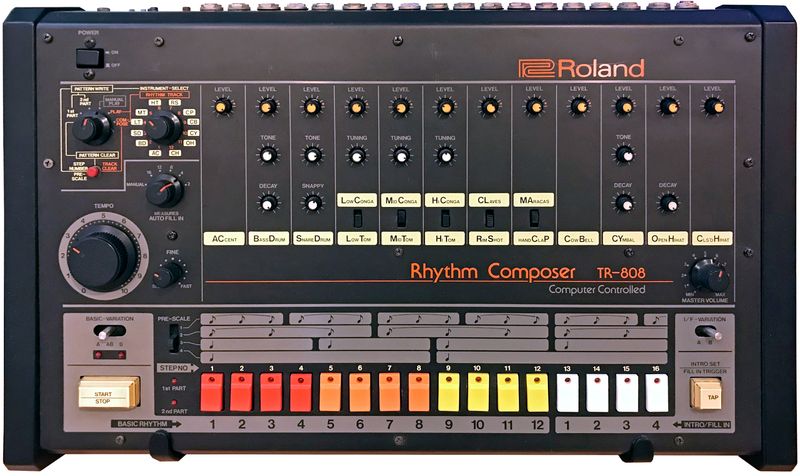
The TR-808 Rhythm Composer (1980)
Three years before the 909, Roland released the Roland TR-808~£4186 used — a fully analog drum machine with a distinctive booming kick, snapping snare, and cowbell that no real drum kit could replicate. It too was considered a failure, criticised for sounding nothing like an acoustic kit. But its ultra-low kick drum frequency and punchy transients were exactly what the emerging hip-hop and electronic music scenes needed. By the time Chicago producers got hold of it, the 808 was already a staple of early hip-hop and electro, and its bass kick became the anchor beneath the acid lines that would follow.
All three machines were considered failures. All three were about to change the world.
Chicago, 1985–1987
The story of acid house begins in Chicago's warehouse music scene. DJs and producers like Frankie Knuckles, Ron Hardy, and Marshall Jefferson were already building on disco's legacy with drum machines and synthesizers, creating what would become house music.
The 303 entered the picture through DJ Pierre, Spanky, and Herb J — three friends who would form Phuture. The story goes that Spanky picked up a second-hand TB-303 cheaply, and DJ Pierre started experimenting with the filter knobs during playback. Rather than trying to make it sound like a bass guitar, he cranked the resonance and cutoff, creating the squelching, screaming sound that nobody had heard before.
The result was "Acid Tracks" (1987), a 12-minute track built entirely around the 303's filter manipulation over a Roland TR-808~£4186 used beat. When Ron Hardy first played it at the Music Box club, the crowd didn't know what to make of it. By the third play, they were losing their minds.
The Sound of Acid
What makes the 303's acid sound so distinctive? It comes from the interaction of several features that were never designed to work this way:
- The filter — A distinctive low-pass diode ladder filter that self-oscillates when resonance is pushed high, creating screaming, liquid tones. Its exact behaviour has been debated by engineers for decades — which is partly why no clone has ever fully nailed it.
- Accent — Adds emphasis to specific steps, further opening the filter and increasing volume. Accented notes have a completely different character to unaccented ones.
- Slide — Creates smooth portamento between notes, giving the 303 its characteristic slithering quality.
- Happy accidents — The confusing sequencer workflow meant that programming mistakes were common. Many of the best acid patterns were unintentional.
The Roland TR-909~£4186 used's contribution was equally essential. Its punchy analog kick drum, sizzling hi-hats, and adjustable shuffle timing provided the driving rhythmic foundation that acid lines needed. The 909's four-on-the-floor kick pattern became the heartbeat of house and techno.
Detroit and Beyond
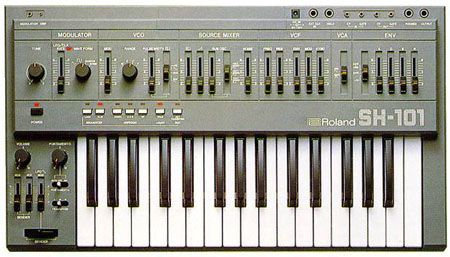
While Chicago created acid house, Detroit was building techno. Producers like Derrick May, Juan Atkins, and Kevin Saunderson used the same machines — 303s, 808s, 909s, and the Roland SH-101~£1270 used — to create a more futuristic, melodic take on electronic dance music. Detroit techno took the tools of acid house and pointed them toward the industrial horizon rather than the dancefloor.
The chain of influence spread quickly. Acid techno pushed the 303 into harder, more abrasive territory. Gabber took the 909 kick to absurd BPMs. Trance borrowed the filter sweep as its defining melodic gesture. Each subsequent genre owed a direct debt to those two Chicago machines.
The UK Summer of Love (1988)
By 1988, acid house had crossed the Atlantic — and it arrived not just as music but as a cultural moment. The UK's Second Summer of Love saw acid house explode through warehouse raves, pirate radio, and M25 orbital parties that drew tens of thousands of people. Tracks by A Guy Called Gerald ("Voodoo Ray"), 808 State, and The KLF brought the 303 and 909 sounds to millions who had never been near a Chicago warehouse.
The establishment responded with alarm. The tabloids ran front pages about acid's effects. Parliament passed the Entertainments (Increased Penalties) Act 1990 to crack down on unlicensed events — though it was largely ineffective and the scene continued to grow — and later the Criminal Justice and Public Order Act 1994 — which infamously defined illegal gatherings as including music "characterised by the emission of a succession of repetitive beats." The machines that couldn't sell in music shops had become powerful enough to prompt new legislation.
Castlemorton Common in May 1992 — a free festival estimated to have drawn between 20,000 and 40,000 people over a week — became the defining confrontation between rave culture and the authorities, and directly accelerated the 1994 act. By then, acid house had already spawned jungle, hardcore, and the early UK garage scene. The cultural legacy was irreversible.
The Legacy Today
The 303 and 909 are now among the most expensive vintage instruments on the used market — a remarkable reversal for machines that retailed for a few hundred pounds and were left unsold on shop shelves. Both command significant prices today; you can see current averages on the Roland TB-303~£2315 used and Roland TR-909~£4186 used pages. The Roland TR-808~£4186 used, already prized before acid house, tells a similar story.
But their sounds are more accessible than ever:
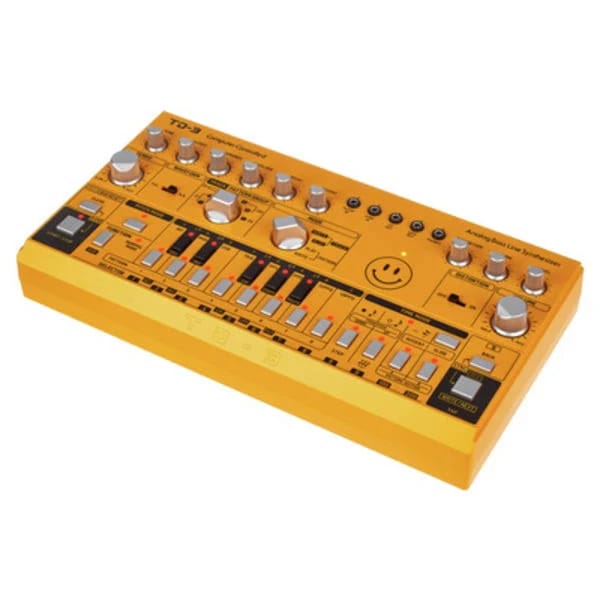
- The Behringer TD-3~£73 used faithfully clones the TB-303 for under £150
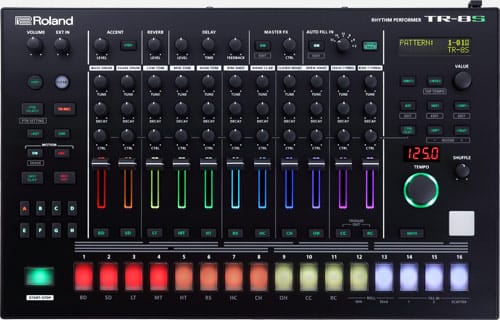
- The Roland TR-8S~£457 used includes authentic 909 (and 808) circuit models
- Countless software plugins recreate both machines with remarkable accuracy
The lineage extends into the present in ways that aren't always obvious. The sub-bass culture of grime and drill traces directly to the 808's kick. Hyperpop's distorted 303-like basslines are the grandchildren of acid house. Every four-on-the-floor kick in contemporary electronic music owes something to the 909.
The irony is complete: instruments that were commercial failures selling for under $100 are now worth thousands, while their sounds can be had for almost nothing through modern clones and software. The 303 and 909 didn't just change music — they proved that the most important thing about any instrument isn't what it was designed to do, but what musicians decide to do with it.