Roland Juno-60
Roland Juno-60 Used Price Guide
Avg. used price: ~£2,343(based on recent Reverb sales)·What are these selling for? →

GearBook helps you research music gear prices. Compare sold prices across Reverb and eBay, see market trends, and find the best deals.
Try a price search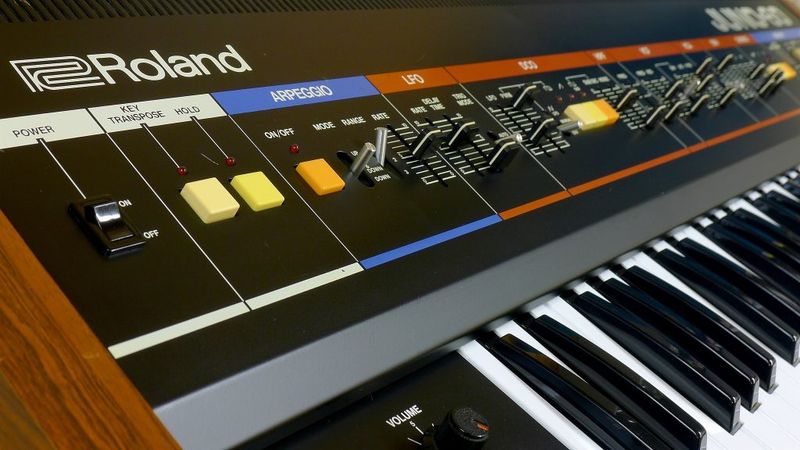
Roland Juno-60 used prices at a glance
The Roland Juno-60 typically sells for between £2,219 and £2,343 on the used market, with an average price of £2,343 based on recent Reverb sold listings. The Roland Juno-60 is a premium piece of gear with strong resale value and is frequently traded on the used market. Prices have been rising over the last 30 days.
- Average used prices
- Latest sold listings
- Price trends over time
- Factors that affect resale value
If you're buying or selling a Roland Juno-60, this gives you a realistic view of what it actually sells for today.
Low
£2,219
Average
£2,343
High
£2,343
- Average Used Price
- £2,343
- Typical Range
- £2,219 – £2,343
- Last Sold Price
- £2,343
- Trend
- rising
- Most Recent Sale
- 12 days ago
Why are Roland Juno-60 prices rising?
Used Roland Juno-60 prices have been increasing over the last 30 days. That usually reflects growing demand or thinning supply on Reverb — buyers chasing a known good unit while listings get rarer. If you've been weighing a purchase, expect to pay slightly above the £2,343 average; if you're selling, you have room to push on condition and included accessories.
Units in better condition or with original packaging tend to sell at the higher end of the range, while heavily used examples sell for less.
Demand for the Roland Juno-60 remains strong among synth enthusiasts and producers, which helps support its resale value.
The Roland Juno-60 is a six-voice analog polyphonic synthesizer released in 1982 that has become one of the most sought-after vintage synths in existence. Building on the foundation of the Juno-6, the Juno-60 added patch memory and a DCB digital interface while keeping the warm, immediate sound that made the original a hit. Its lush pads, thick basses, and unmistakable built-in chorus have appeared on countless recordings across every genre, from new wave and synth-pop to modern electronic and indie music.
Sound Architecture
Each of the Juno-60's six voices features a single digitally controlled oscillator with sawtooth and pulse waveforms, pulse width modulation, and a sub-oscillator one octave below. A noise generator adds texture when needed. The signal runs through a non-resonant high-pass filter and a resonant 24dB low-pass filter, shaped by a dedicated ADSR envelope. An LFO provides modulation for vibrato, filter sweeps, and PWM effects. The single-oscillator design keeps programming simple and direct, and the built-in chorus effect (with two modes) fattens the sound dramatically, transforming a single oscillator into something that sounds far larger.
Patch Memory and Controls
The Juno-60 stores 56 patches in memory using a combination of bank and number buttons, a significant upgrade over the Juno-6 which had no memory at all. All parameters are laid out on the front panel as dedicated sliders and switches, making sound design fast and intuitive. There are no menus to navigate. The built-in arpeggiator adds rhythmic movement, and the DCB connector allows synchronization with other Roland gear from the era, though a DCB-to-MIDI converter is needed for modern setups.
Build and Practical Details
The 61-key keyboard is unweighted but feels solid under the fingers. At 12 kg (about 26.5 lbs), the Juno-60 is manageable for transport, and its dimensions of 1060 x 378 x 113 mm make it a reasonable size for studio or stage use. Outputs include a mono/stereo jack with a three-position level switch and a stereo headphone jack. Build quality is classic early-80s Roland: sturdy metal chassis with a clean, functional layout.
Who Is This For?
- Synth enthusiasts and collectors who want one of the defining analog polysynths
- Producers chasing authentic vintage pad, bass, and lead sounds
- Musicians who value immediate, hands-on sound design with no menu diving
- Artists in electronic, indie, wave, and ambient genres looking for that signature Juno character
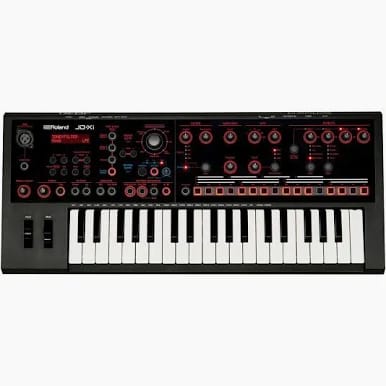
The Juno-60 commands premium prices on the used market, often exceeding $3,000 for clean examples. If the vintage hardware is out of budget, Roland offers a software recreation through Roland Cloud, and the Juno-X hardware synth provides a modern take on the Juno sound. But for many players, nothing quite matches the feel and tone of the original.
Videos
Frequently Asked Questions
Specifications
| Year Released | 1982 |
| Synthesis | Analog subtractive (DCO) |
| Polyphony | 6 voices |
| Keys | 61 (unweighted) |
| Oscillator | 1 DCO per voice (saw, pulse, sub, noise) |
| Filter | Non-resonant HPF, resonant 24dB LPF |
| Patch Memory | 56 patches |
| Effects | Chorus (2 modes), Arpeggiator |
| Dimensions | 1060 x 378 x 113 mm |
| Weight | 12 kg (26.5 lbs) |
Resources
Looking to Buy Used?
Browse current listings on Reverb and eBay to find deals.
Featured In
Related Gear
More from Roland
Specs and prices are for reference only and may be outdated or contain errors. See full disclaimer. Affiliate links may earn commission.