The sequencer is the invisible backbone of electronic music. While synthesizers get the glory, it's sequencers that turned electronic sound into electronic music – repeating patterns, evolving phrases, and rhythms too precise (or deliberately imprecise) for human hands. This is the story of how we got from punched paper tape to 128-step patterns with per-step parameter automation.
The Pre-Electronic Era: Mechanical Sequencing
Before voltage-controlled synthesizers existed, mechanical sequencers had been automating music for centuries. Music boxes, barrel organs, and player pianos all used physical programming – pins on cylinders, holes in paper rolls – to trigger notes in sequence.
The leap to electronic sequencing began in the 1940s when Raymond Scott built electro-mechanical sequencers using thyratrons and relays. Scott's machines could generate repeating patterns of electronic tones, predicting the step sequencer concept by decades.
The 1950s: Punched Paper and Room-Sized Machines
RCA Mark II Sound Synthesizer (1957)
The RCA Mark II, completed at Princeton's Columbia-Princeton Electronic Music Center, was the first programmable electronic music synthesizer. It filled an entire room and read punched paper tape to control its sound generation.
Users programmed compositions by punching holes in paper – a painstaking process requiring advance planning of every note. There was no real-time performance, no improvisation. Composers like Milton Babbitt spent months programming pieces that lasted minutes.
The Mark II proved electronic music was possible, but its workflow was impractical for anyone outside academia.
The 1960s: Voltage Control Changes Everything
Don Buchla's Sequential Voltage Source (1965)
Don Buchla completed the first Buchla 100-series modular system in 1965, which included the world's first commercially available step sequencer – initially as 8- and 16-step modules (the 123 and 146).
Buchla's sequencers output control voltages that could be patched to any destination: pitch, filter cutoff, amplitude. This was revolutionary. Instead of programming complete compositions in advance, musicians could set up looping patterns that evolved through modular patching.
Moog 960 Sequential Controller (1968)
Three years later, Robert Moog introduced the 960 Sequential Controller. Based heavily on Buchla's design but adding a built-in clock, the 960 offered three parallel rows of eight steps, producing three simultaneous control voltage sequences.
By chaining multiple 960s via the 962 Sequential Switch, users could create patterns up to 24 steps – or longer with creative patching.
The 960 established the step sequencer paradigm:
- Rows of knobs, one per step
- A clock advancing through steps
- Looping patterns with adjustable length
- Control voltage output to synthesizer parameters
This format would influence hardware sequencers for the next 50 years.
The 1970s: Sequencers Meet Synthesizers
The modular era made sequencers powerful but complex. The 1970s brought integrated sequencers – built into synthesizers rather than existing as separate modules.
Tangerine Dream and the Berlin School
Bands like Tangerine Dream, Klaus Schulze, and Kraftwerk built entire albums around sequenced patterns. Albums like Phaedra (1974) and Rubycon (1975) featured hypnotic, evolving sequences running for entire side-long tracks.
The limitations became the aesthetic. Eight or sixteen steps, endlessly looping, with subtle filter and pitch variations creating movement. The "Berlin School" of electronic music was born from step sequencer constraints.
1980-1984: Roland's X0X Revolution
Roland's "x0x" series – the TR-808, TB-303, and TR-909 – didn't just influence music. They defined multiple genres and established programming paradigms still used today.
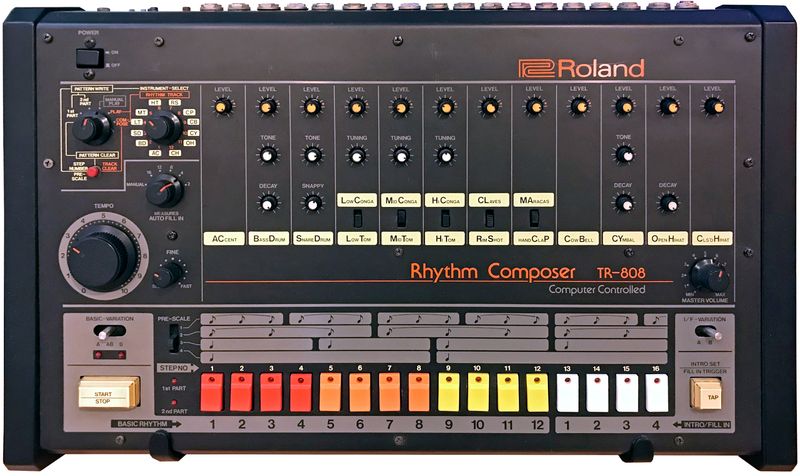
Roland TR-808 (1980)
The Roland TR-808~£4319 used wasn't the first programmable drum machine, but it was the most influential.
Key sequencer innovations:
- Step programming: Users entered patterns one step at a time, tapping buttons to place sounds on a 16-step grid
- Pattern chaining: Up to 32 patterns could be linked into songs
- Accent track: A separate sequencer lane for dynamics
- Individual outputs: Each sound could be processed independently
The 808's step-entry workflow became the template for drum programming. When Roland discontinued it in 1983 after building only 12,000 units, nobody predicted its sounds would define hip-hop, electro, and house music.
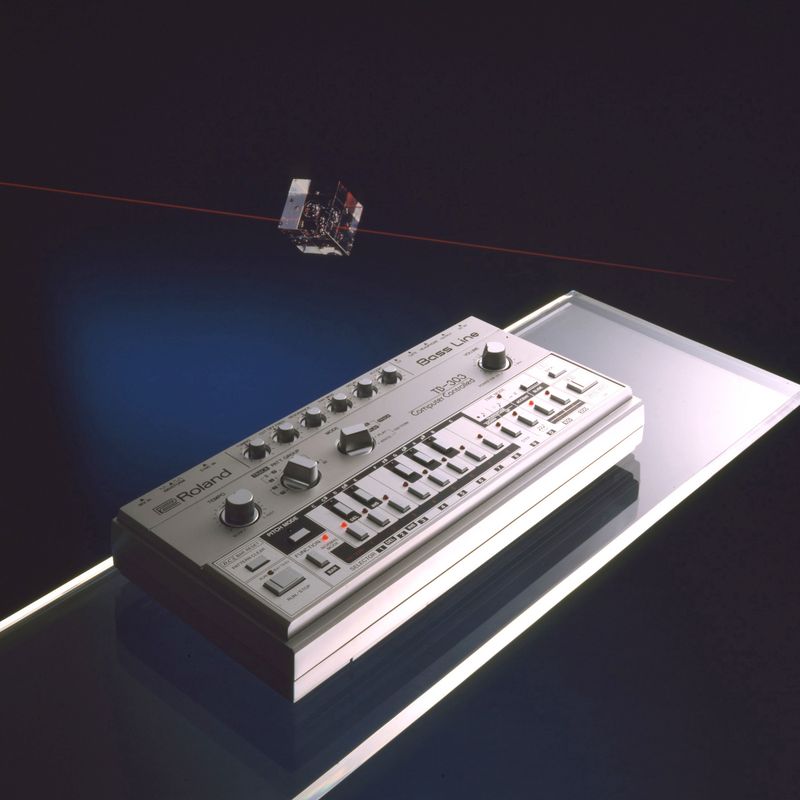
Roland TB-303 (1981)
The Roland TB-303~£2328 used included a peculiar sequencer designed to mimic bass guitar patterns. Users programmed pitch and timing in separate passes, with slides and accents creating the "squelching" character that later defined acid house.
The TB-303's sequencer was notoriously unintuitive. Early users struggled to program realistic bass lines – but those "mistakes" became the acid sound. Chicago house producers like Phuture (whose track "Acid Tracks" launched the genre) exploited the sequencer's quirks rather than fighting them.
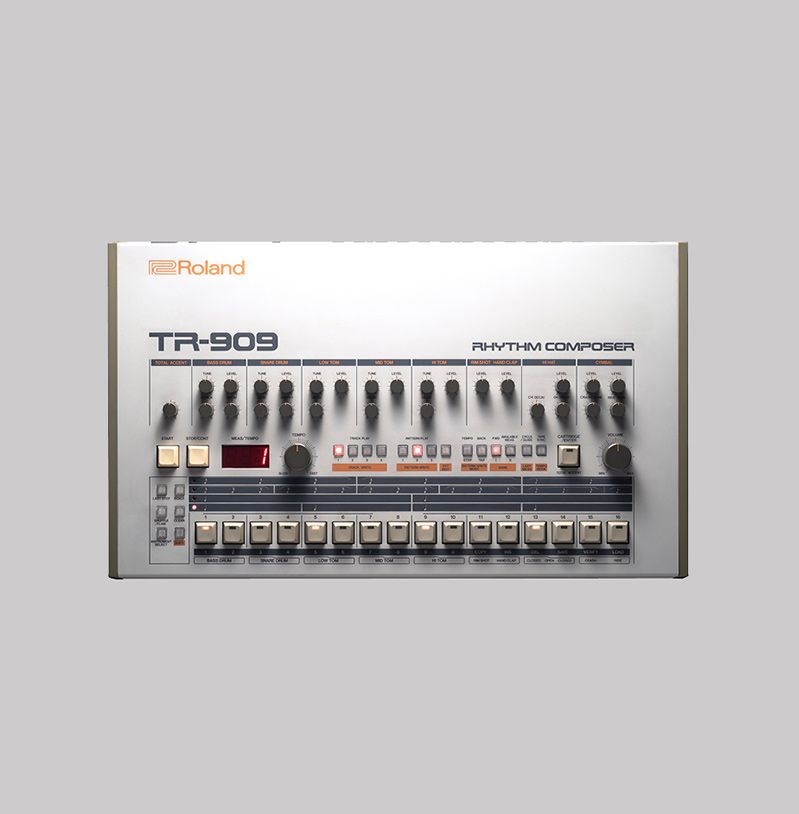
Roland TR-909 (1983)
The Roland TR-909~£4155 used refined the 808's workflow and added one crucial feature: MIDI. For the first time, a drum machine could synchronize with external sequencers and synthesizers using an industry-standard protocol.
The 909 was a commercial failure – musicians wanted realistic drum sounds, and the 909's punchy electronic kick and snare weren't "real" enough. Roland built only 10,000 units before discontinuing it.
A decade later, those same sounds became foundational to techno and house music.
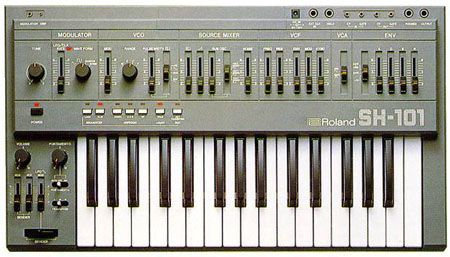
Roland SH-101 (1982)
The Roland SH-101~£1229 used wasn't just a synthesizer – it included a 100-step digital sequencer that could record pitch, duration, and rest information. This was unusually long for the era.
More importantly, the SH-101 was portable. Strap it on with the optional grip handle and you could perform sequenced basslines live. It bridged the gap between studio tool and live instrument.
1979-1985: Digital Workstations and MIDI
While Roland was building drum machines, a parallel revolution was happening in digital sampling and sequencing.
Fairlight CMI (1979)
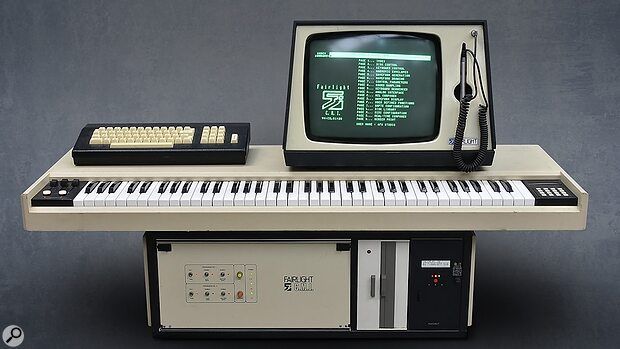
The Fairlight CMI (Computer Musical Instrument) introduced Page R – the first graphical pattern-based sequencer. Notes appeared as blocks on a screen, running left to right. You could edit them visually rather than programming blind.
This was revolutionary. For the first time, sequencing became visual. The concept of seeing your arrangement on screen – now standard in every DAW – started here.
The Fairlight cost around $25,000. Only major artists and studios could afford it, but its influence on Peter Gabriel, Kate Bush, and Art of Noise demonstrated what digital sequencing could achieve.
MIDI Standard (1983)
The Musical Instrument Digital Interface standardised communication between instruments. Before MIDI, synchronizing multiple sequencers required proprietary clock signals. After MIDI, any compatible device could play in time with any other.
MIDI didn't just enable synchronization – it enabled external sequencing. Dedicated MIDI sequencers like the Roland MSQ-700 (1983) could control multiple synthesizers from a single device.
Yamaha QX1 (1984)
While Roland focused on drum machines, Yamaha built the QX1 – the most sophisticated MIDI sequencer of its era. At nearly $3,000, it offered:
- 8 independent MIDI outputs (one per track)
- 80,000 note capacity
- 384 ticks per quarter note resolution (extremely fine for 1984)
- Built-in 5.25" floppy disk storage
- Computer-style keyboard for data entry
The QX1 was designed to control Yamaha's TX816 rack (eight DX7 synthesizers in one unit). Its professional approach – serious interface, high capacity, precise timing – influenced later workstation sequencers.
Yamaha later created the QY series (1991 onwards), portable battery-powered units combining sequencers with built-in sound generators. The pocket-sized QY70 became a songwriting tool for musicians who needed ideas captured anywhere.
1988-2000: The MPC Era
Akai MPC60 (1988)
The Akai MPC60, designed by Roger Linn (creator of the Linn LM-1 drum machine), combined:
- 12-bit sampling
- Velocity-sensitive pads
- 16-track sequencer with swing timing (99 sequences)
The sequencer was the secret weapon. Linn's implementation of swing – the subtle timing offsets that made patterns feel human – became legendary. "MPC swing" gave hip-hop its groove, a timing feel that couldn't be replicated by quantizing to a grid.
MPC3000 (1994)
The MPC3000 became the hip-hop production standard. Its 32-voice polyphony and extensive sequencing capabilities (with real-time pitch shifting and time stretching) appeared on countless golden-era hip-hop records.
J Dilla's work on the MPC3000 demonstrated how "wrong" timing – deliberately playing slightly off the grid – created emotional impact. The MPC's sequencer could capture these human imperfections.
The MPC Legacy
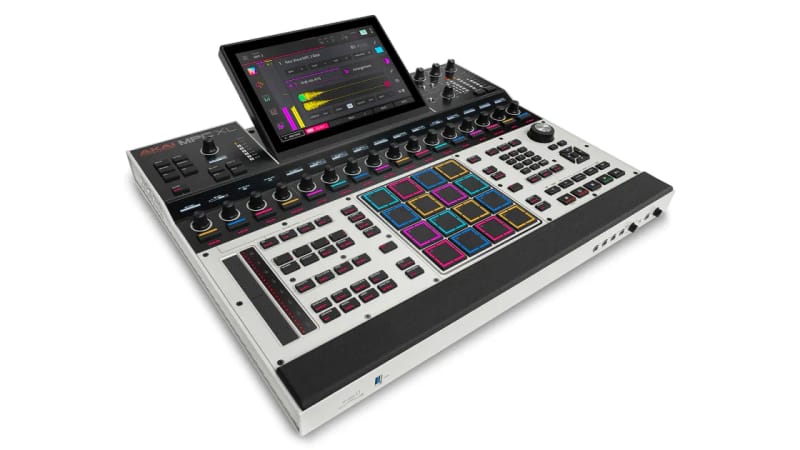
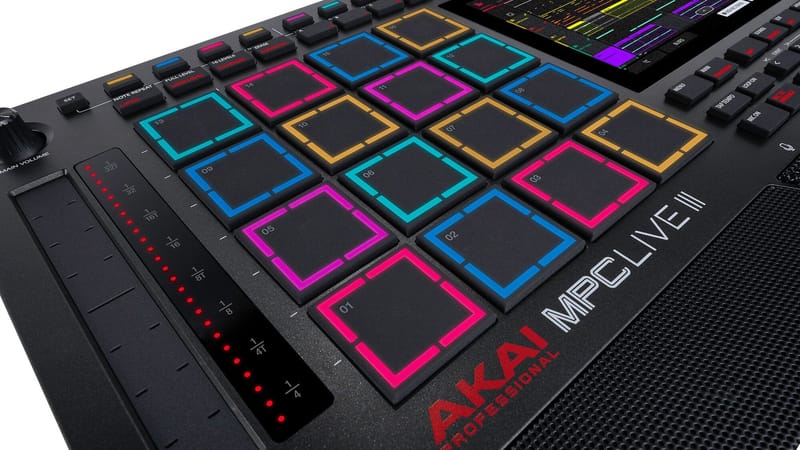
The MPC workflow – sample, chop, sequence with swing – influenced generations of beat makers. Modern MPCs like the Akai MPC Live 3 and Akai MPC XL~£1870 used retain the core sequencing philosophy while adding modern features like polyphonic aftertouch and MIDI polyphonic expression.
Yamaha's Groovebox Era: RM1x and RS7000
While Akai dominated hip-hop, Yamaha built sequencers for electronic music producers.
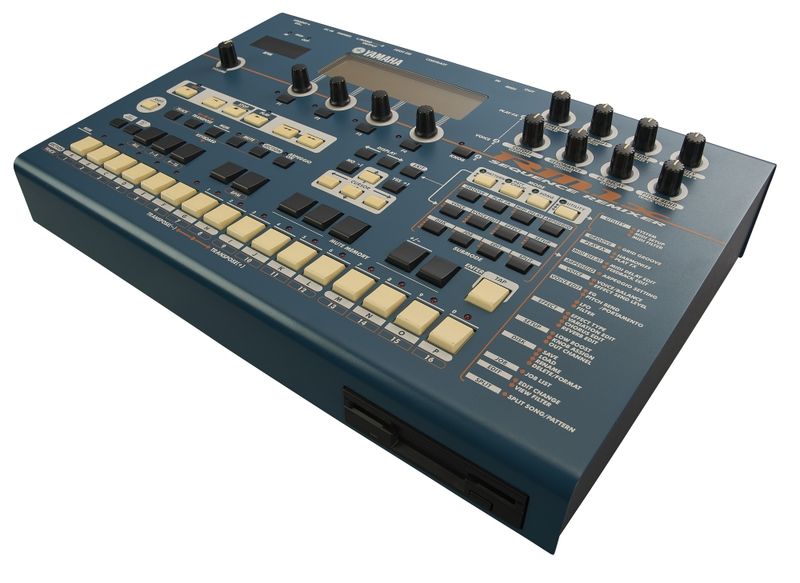
The Yamaha RM1x~£242 used (1999) combined a step-programmable drum machine, synthesizer, and 16-track sequencer in one unit. Its sequencer was remarkably deep – pattern-based with real-time recording, step entry, and extensive MIDI control. Many consider the RM1x sequencer among the best ever put in hardware, with workflow ideas that still influence modern grooveboxes.
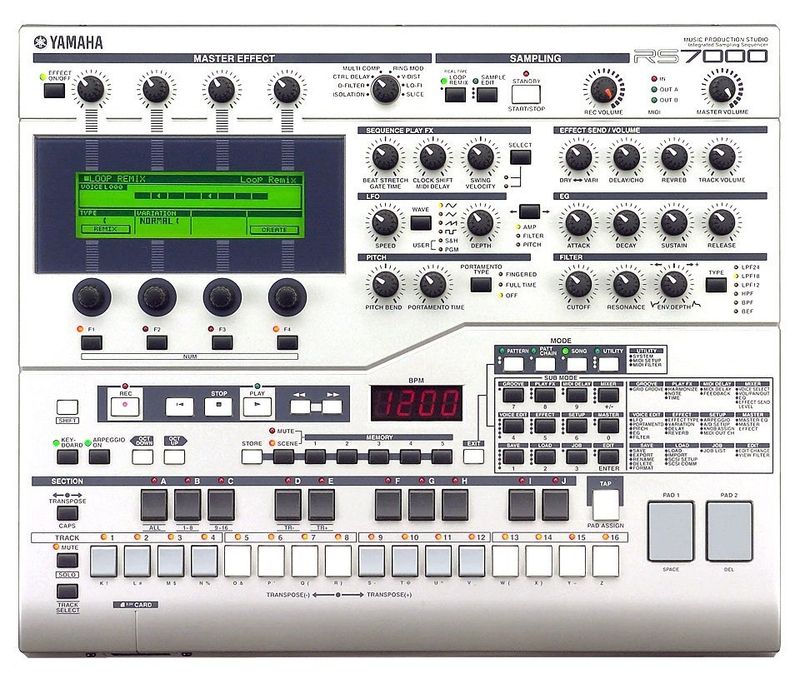
The Yamaha RS7000~£460 used (2001) expanded on the RM1x, adding sampling capabilities alongside the sequencer and synthesis. It became a complete production workstation – closer to a MOTIF than a dance machine, but retaining the RM1x's sequencer DNA.
Both machines found dedicated followings in techno and electronic scenes, offering an alternative to MPC-style workflows with tighter integration between sequencing and synthesis.
2000-2015: Computer-Based Sequencing Dominates
The rise of DAWs (Digital Audio Workstations) shifted sequencing to software. Cubase, Logic, Pro Tools, and Ableton Live offered unlimited tracks, undo history, and integration with virtual instruments.
Hardware sequencers seemed obsolete. Why use a 16-step pattern when you could have infinite linear timeline?
But something was lost. Computer-based production could feel disconnected – mouse clicks instead of knob turns, menus instead of dedicated buttons. The limitations of hardware had sparked creativity; software's freedom sometimes paralysed it.
2010s-Present: The Hardware Sequencer Renaissance
Elektron's Parameter Locks
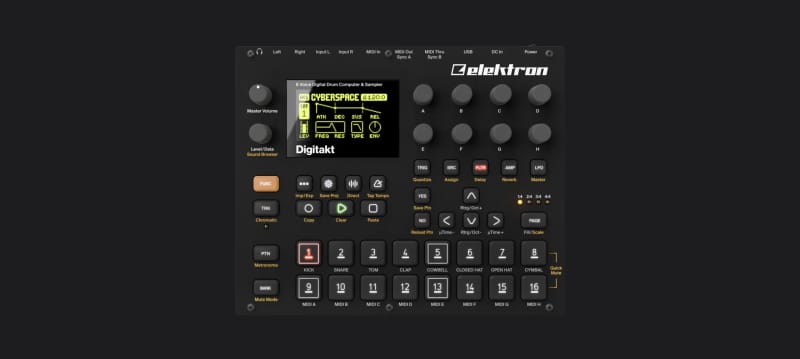
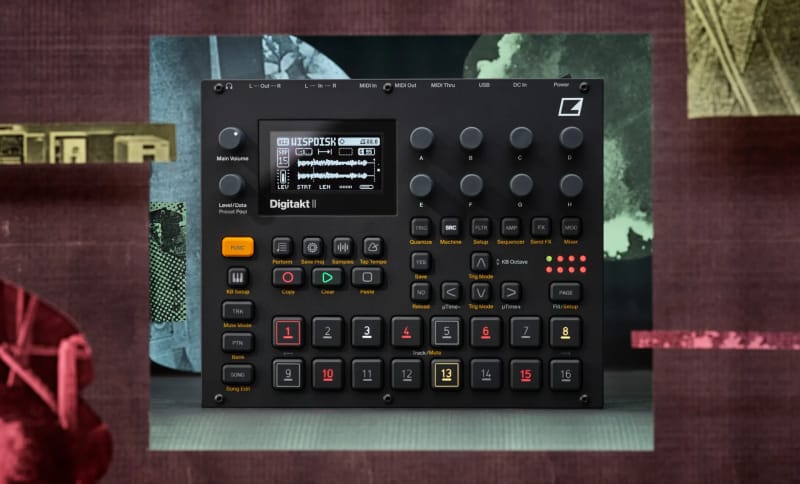
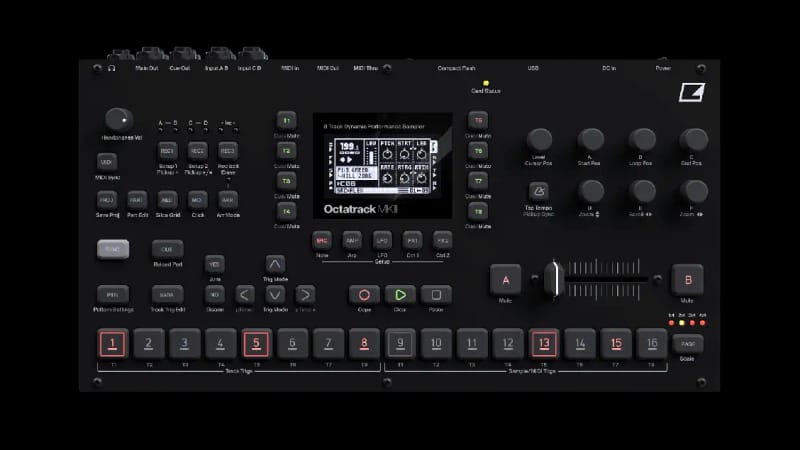
Elektron (founded 1998) revolutionised hardware sequencing with a concept they call parameter locks. On devices like the Elektron Digitakt~£392 used, Elektron Digitakt II~£666 used, and Elektron Octatrack MKII~£840 used, every sequencer step can have unique parameter values.
Want the filter to open on step 5, close on step 9, and add delay on step 13? Lock those parameters to those steps. Up to 72 parameters can be automated per pattern.
This made hardware sequencers compositional tools again. A 16-step pattern with parameter locks can contain more variation than a 64-bar arrangement without them.
Conditional trigs add probability and logic: "play this step 50% of the time," or "only on the first loop," or "every third repetition." Patterns become generative, evolving without intervention.
Dedicated Hardware Sequencers
A new category emerged: standalone sequencers designed purely to control other gear. No built-in sounds, just sophisticated sequencing.
Sequentix Cirklon (2011) became the "holy grail" of hardware sequencing. With five independent MIDI ports, extensive CV/Gate outputs, and deep pattern manipulation, it attracted artists like Aphex Twin and The Chemical Brothers. Notoriously difficult to obtain (years-long waiting lists), the Cirklon proved demand existed for uncompromising sequencer hardware.
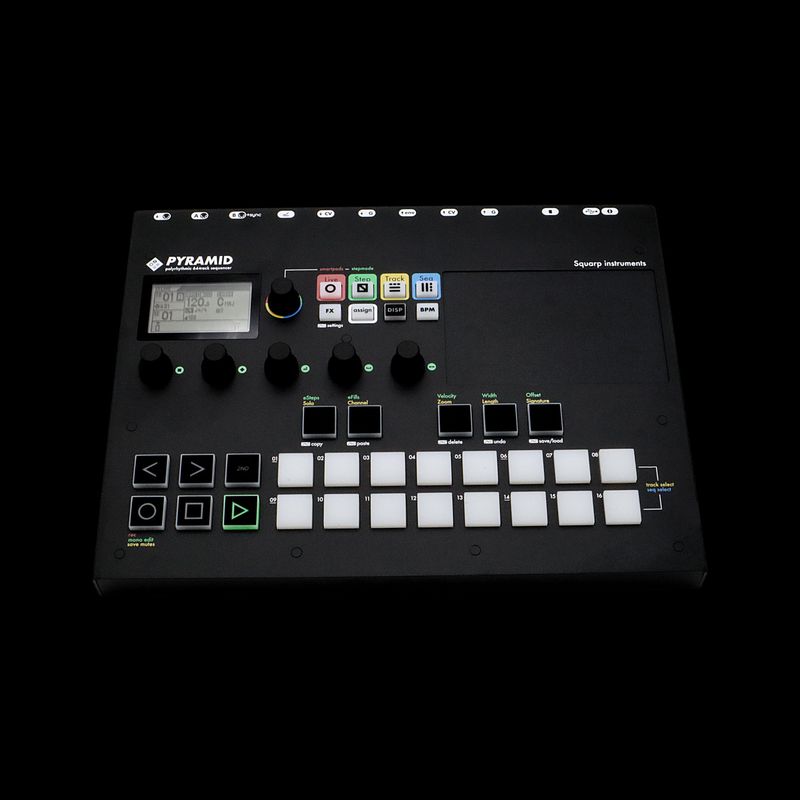
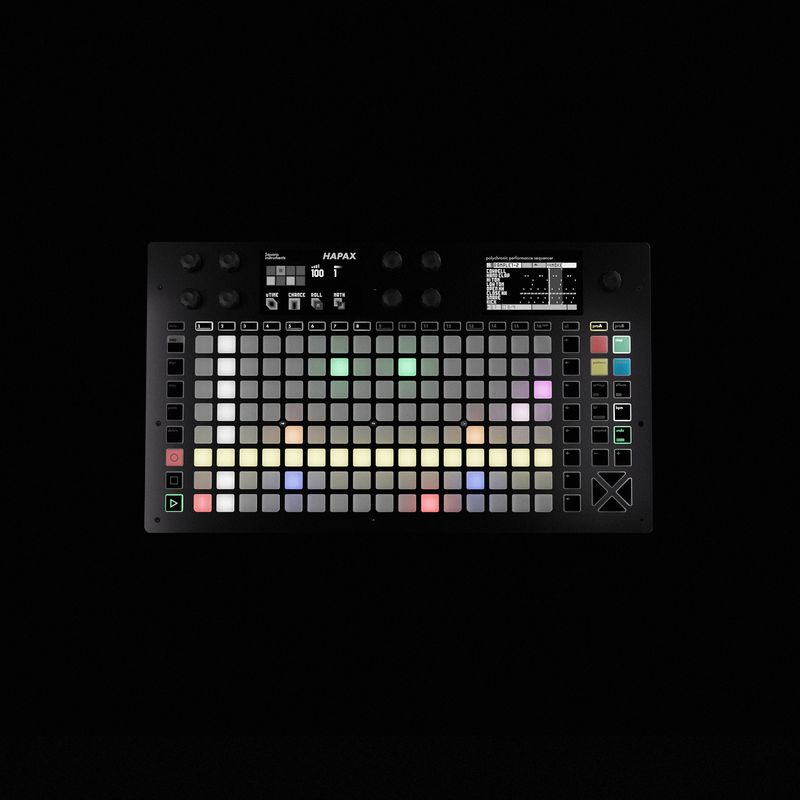
Squarp Pyramid~£302 used (2015) offered 64 polyphonic tracks with polyrhythmic and polymetric capabilities, plus a built-in Euclidean sequencer for algorithmic pattern generation. At a more accessible price point than the Cirklon, it became central to many dawless setups. Squarp followed with the Squarp Hapax~£775 used (2021), featuring dual high-resolution screens, 16 tracks of polyphonic sequencing, and workflow improvements including a powerful song mode and algorithmic tools. The Hapax refined the Pyramid's vision into a more immediate, performance-friendly format.
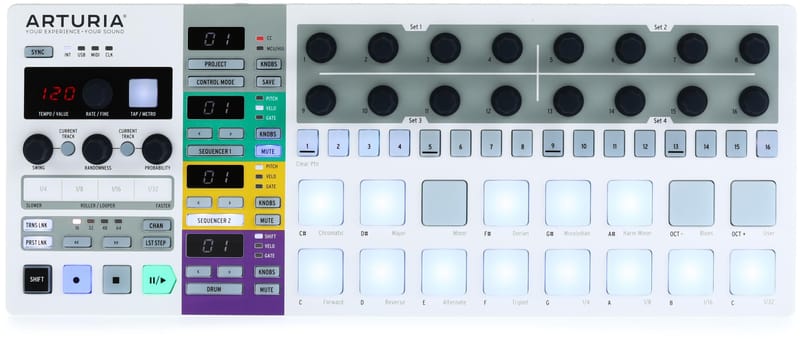
Arturia BeatStep Pro~£127 used (2015) democratised hardware sequencing further – two melodic sequencers plus a drum sequencer, with CV/Gate outputs for modular gear, at under $300. It proved hardware sequencing didn't require boutique pricing.
Social Entropy Engine pushed polyphonic sequencing with 512 patterns, accent, slide, and arpeggiator features – capabilities that rivalled software but in dedicated hardware form.
These devices share a philosophy: the sequencer as the brain of a hardware setup, controlling synthesizers, drum machines, and modulars from a central hub.
Tracker-Style Sequencing Returns
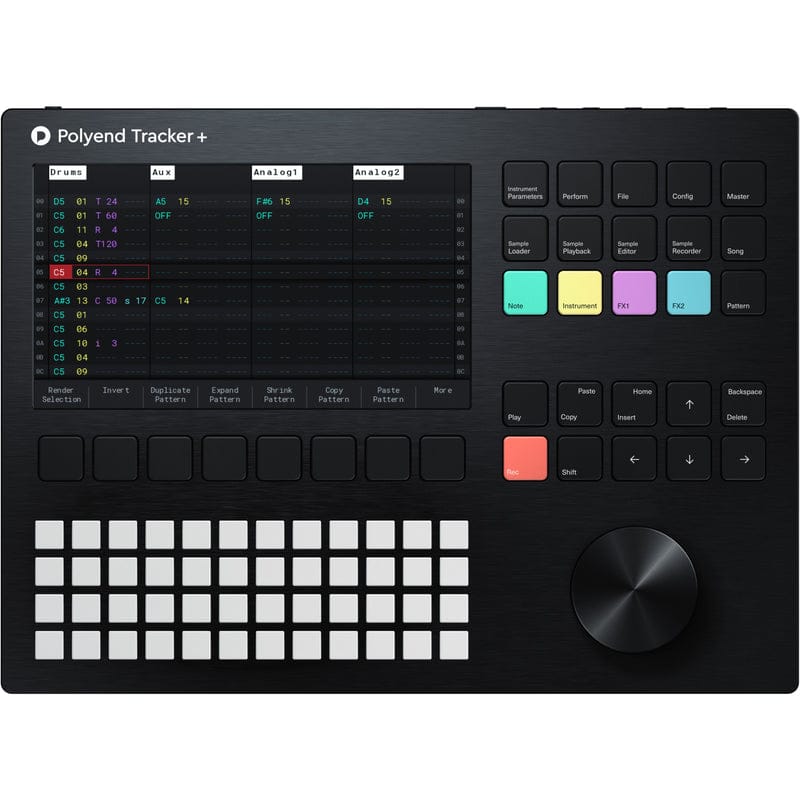
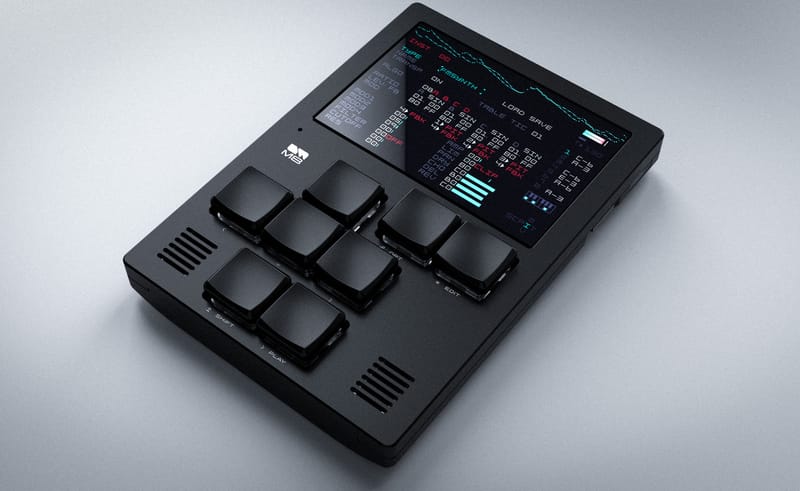
The tracker – a vertical sequencer format from 1980s computer music – has returned in hardware form.
The Polyend Tracker+~£483 used and Dirtywave M8 Tracker~£501 used use tracker-style interfaces where notes scroll vertically, each row representing a step. This format excels at detailed per-step control and visualising complex patterns.
Trackers appeal to producers who find piano roll interfaces limiting, offering a different relationship between visual representation and musical time.
Synthesizers with Built-in Sequencers
Many modern synthesizers include capable onboard sequencers, blurring the line between instrument and composition tool.
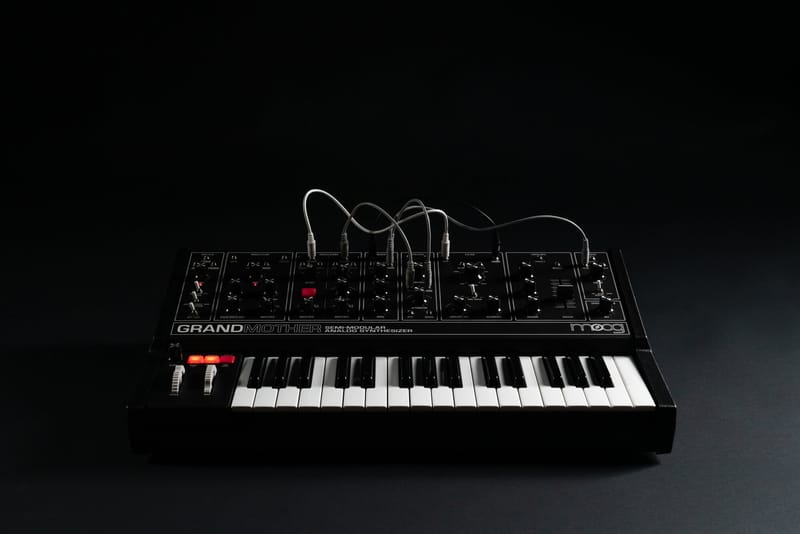
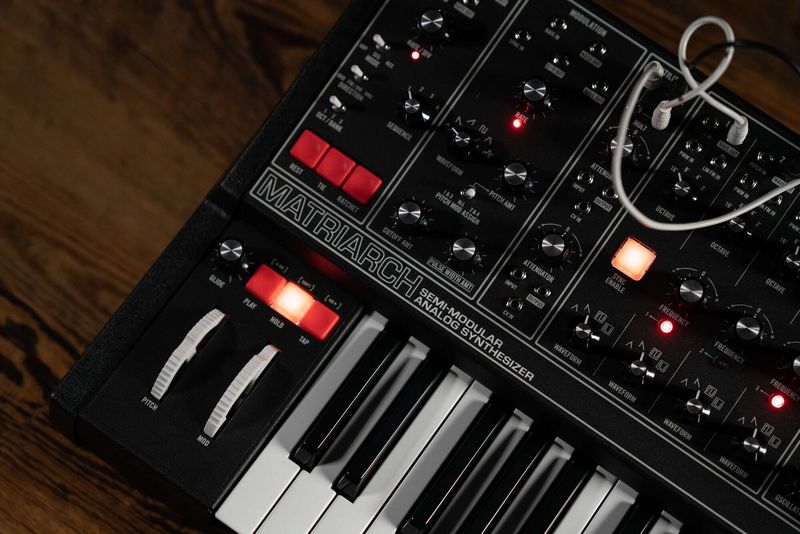
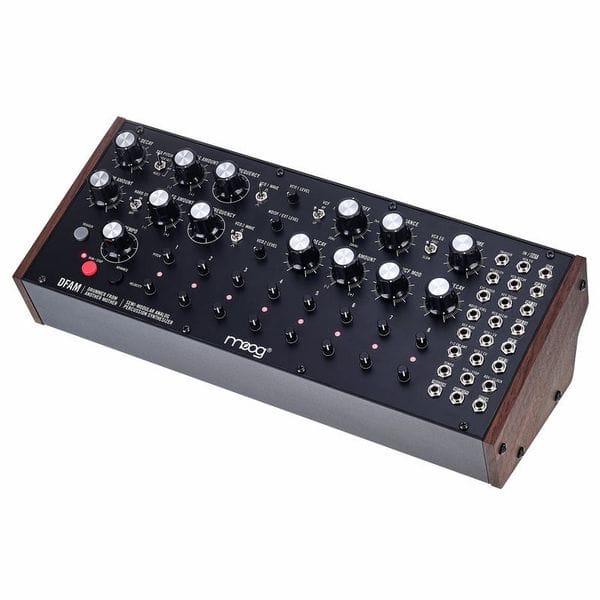
Moog integrated sequencers into semi-modular designs like the Moog Grandmother~£607 used and Moog Matriarch~£1380 used – real-time sequencers storing up to 256 notes that can control not just the internal synth but external gear via CV/Gate. The Moog DFAM~£354 used (Drummer From Another Mother) takes this further with a percussive synth built entirely around its 8-step sequencer.
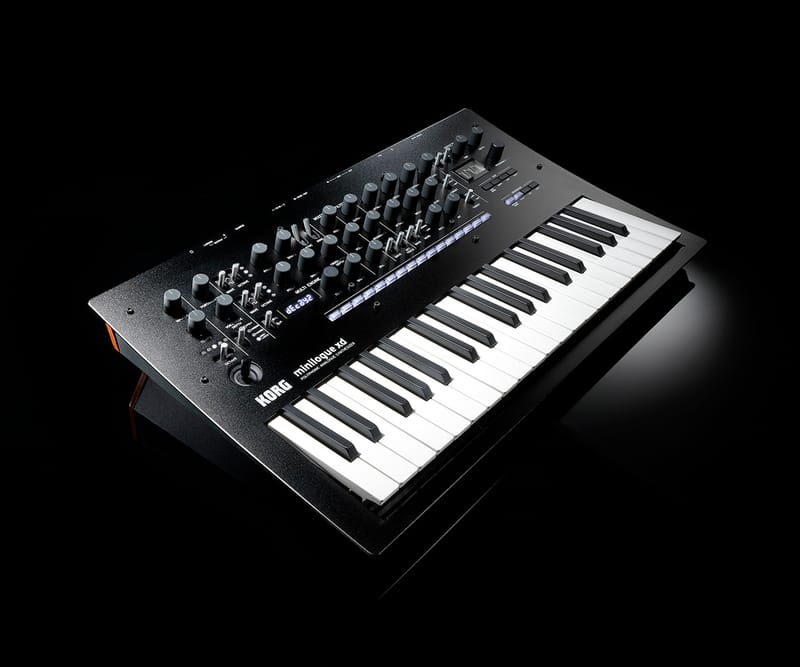
Korg's modern analog line features polyphonic sequencing. The Korg Minilogue XD~£388 used offers a 16-step sequencer with motion recording – automating knob movements per step, similar to Elektron's parameter locks. Even budget synths like the Monologue include surprisingly deep sequencers.
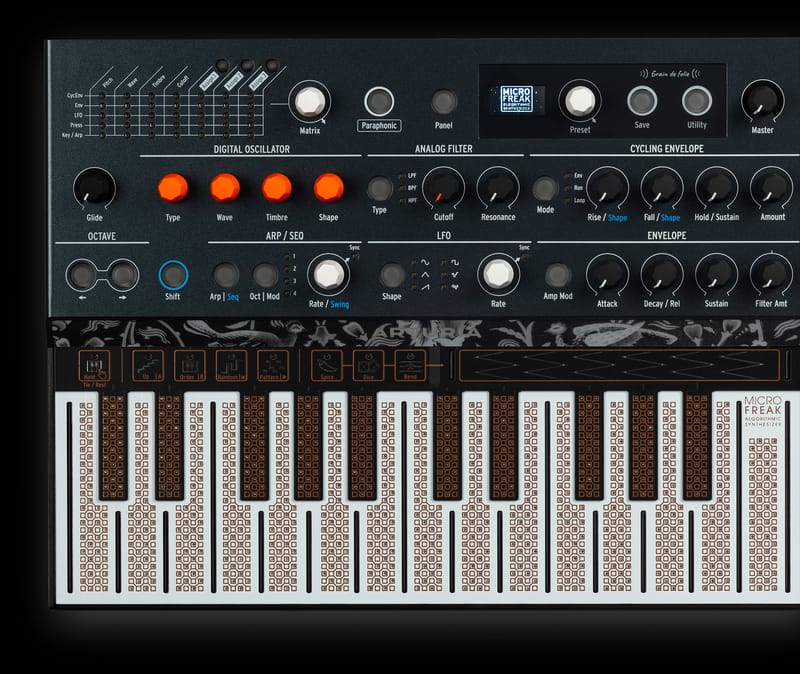
Arturia's Arturia MicroFreak~£206 used packs a 64-step sequencer with parameter automation into a compact, affordable package. The spice and dice randomisation features turn sequencing into a generative tool.
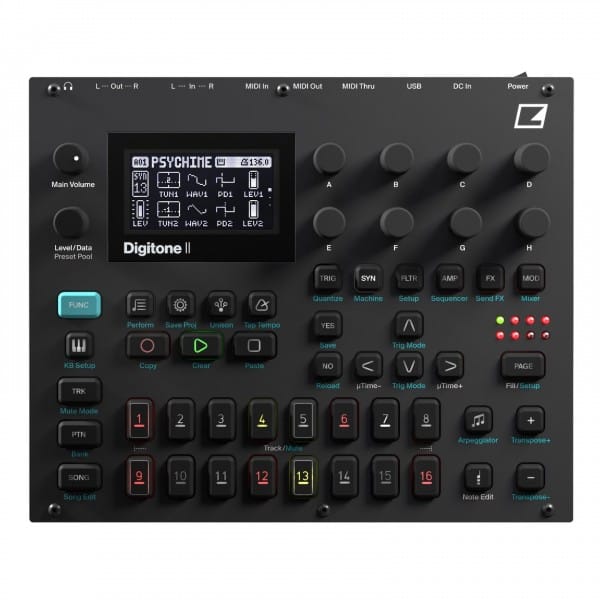
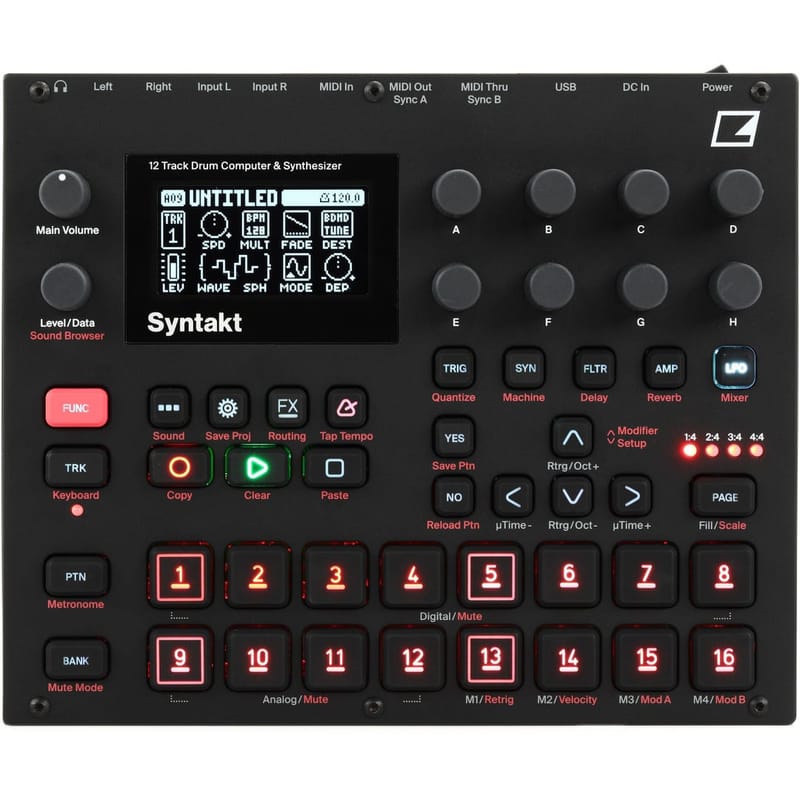
Elektron builds their sequencer into everything. The Elektron Digitone II~£670 used is as much a sequencer as it is an FM synthesizer – the Elektron workflow of parameter locks, conditional trigs, and probability applies to its own sound engine. The same is true of the Analog Four and Elektron Syntakt~£553 used.
This integration changes how people work. A synth with a great sequencer becomes self-contained – you can sketch complete ideas without external gear or a computer. The sequencer isn't an add-on; it's core to the instrument's identity.
Modular Sequencer Diversity
The Eurorack modular format has exploded with sequencer options:
- Melodic sequencers like Make Noise René for generative melodies
- Trigger sequencers like Noise Engineering Mimetic Digitalis
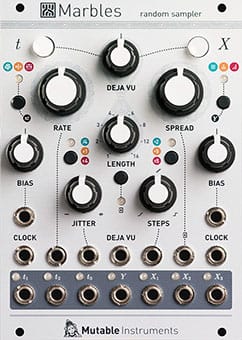
- Probability sequencers like Mutable Instruments Marbles~£245 used
Modular users often run multiple sequencers simultaneously – one handling pitch, another handling rhythm, a third introducing chaos. The complexity possible exceeds even vintage Moog systems.
Key Sequencer Concepts Across Eras
Step vs Linear
Step sequencers divide time into discrete slots (steps). A 16-step pattern loops; each step triggers notes or changes parameters. This approach encourages looping, repetition, and pattern-based composition.
Linear sequencers (like DAW timelines) treat time continuously. Record any length, edit freely, no enforced looping. This approach suits arrangement and one-shot compositions.
Most modern hardware combines both: create patterns with step sequencing, arrange patterns into linear songs.
Swing and Groove
Swing delays off-beat notes, creating rhythmic push-pull. The MPC's implementation became legendary, but every sequencer handles swing differently.
Some sequencers offer groove templates – timing offsets extracted from human performances that can be applied to quantized patterns.
Probability and Generative
Modern sequencers increasingly add probability – notes that might play, or might not. This creates variation without programming every difference.
Generative sequencers go further, algorithmically creating new patterns based on rules. The user defines constraints; the machine explores possibilities.
The Sequencer's Role Today
Hardware sequencers have survived the software era because they offer:
Immediacy: One button per step, one knob per parameter. No menus, no mouse.
Integration: Modern sequencers with CV, MIDI, and USB connect everything from vintage modulars to current DAWs. Many producers use hardware sequencers to control VST instruments – getting the tactile, immediate workflow of hardware while triggering software synths and samplers. A Digitakt or Pyramid sequencing Serum or Omnisphere combines the best of both worlds: hardware hands-on control with software sonic flexibility.
Performance: Hardware sequencers can be played – patterns unmuted, parameters tweaked, chaos introduced – in ways software struggles to match.
The Constraint Spectrum
Perhaps the most interesting aspect of modern hardware sequencers is how they handle constraint – and how that constraint affects creativity.
At one end, devices like the Korg Volca series or Teenage Engineering Pocket Operators offer deliberately limited sequencers: 16 steps, minimal parameter control, basic pattern storage. These limitations aren't bugs – they're features. When you can't endlessly tweak, you commit to ideas faster. When you only have 16 steps, you learn to make those steps count. The boundaries force musical decisions that infinite options would delay indefinitely.
This "less is more" philosophy has proven remarkably productive. Entire albums have been made on gear that, on paper, seems impossibly limited. The constraint becomes a creative partner – you work with the machine's boundaries rather than fighting them.
At the other end, sequencers like the Cirklon, Squarp Pyramid, or Elektron Octatrack offer extraordinary flexibility: hundreds of patterns, 64+ tracks, polymetric and polyrhythmic capabilities, extensive automation, conditional logic. These tools can sequence entire studios, handling complexity that rivals DAW arrangements.
Yet even these powerful sequencers maintain deliberate boundaries. They're still pattern-based rather than infinitely linear. They still encourage looping and variation over through-composed arrangements. The constraint exists – it's just set at a different level.
The key insight: constraints aren't inherently limiting – they're focusing. A 16-step sequencer focuses you on groove and variation within repetition. A 64-track sequencer focuses you on arrangement and interaction between parts. Both create productive boundaries; they just define different creative spaces.
Many producers own both: a limited device for sketching ideas quickly, and a deeper sequencer for developing those ideas into complete arrangements. The Digitakt's 64 steps per track hits a middle ground – enough room to breathe, not so much that you drown in options.
Modern hardware sequencers succeed not despite their limitations, but because those limitations are intentional and musical. Software offers infinite flexibility; hardware offers curated choices. For many producers, that curation is exactly what makes hardware valuable.
The history of sequencers is the history of electronic music itself. From punched paper to parameter locks, each era's technology shaped the music that emerged. The tools change, but the impulse remains: to make machines repeat, evolve, and groove.
Featured Gear
Drum Machines & Sequencers
- Roland TR-808~£4319 used – The drum machine that defined hip-hop
- Elektron Digitakt~£392 used – Modern parameter-lock workflow
- Elektron Digitakt II~£666 used – Next-gen Elektron sequencing
Samplers & Production Centres
- Akai MPC Live 3 – Portable MPC with legendary swing
- Akai MPC XL~£1870 used – Most powerful MPC ever made
- Elektron Octatrack MKII~£840 used – Performance sampling with Elektron sequencer
Trackers
- Polyend Tracker+~£483 used – Modern tracker hardware
- Dirtywave M8 Tracker~£501 used – Portable tracker production
Synths with Sequencers
- Roland SH-101~£1229 used – Classic synth with 100-step sequencer
Prices shown are based on recent sales data from Reverb. Averages can be affected by regional variations, condition, and product variants — use the search links above for current listings.